— The Sacred Valley —
Rajgir
Five Hills, Three Religions, and a Valley That Remembers Everything
Best Time
October – March
Recommended Stay
1–2 nights
Nearest Airport
Patna (PAT), 100 km
The Story
The Valley Older Than Empires
“Before there was Pataliputra, before there was Delhi, before there was almost any city in northern India — there was Rajgir. The Buddha taught here. Mahavira taught here. Kings rose and fell here. The hills remember everything.”
Rajgir is one of those rare places on earth where geography and history have conspired to make the same point: this valley mattered, and continues to.
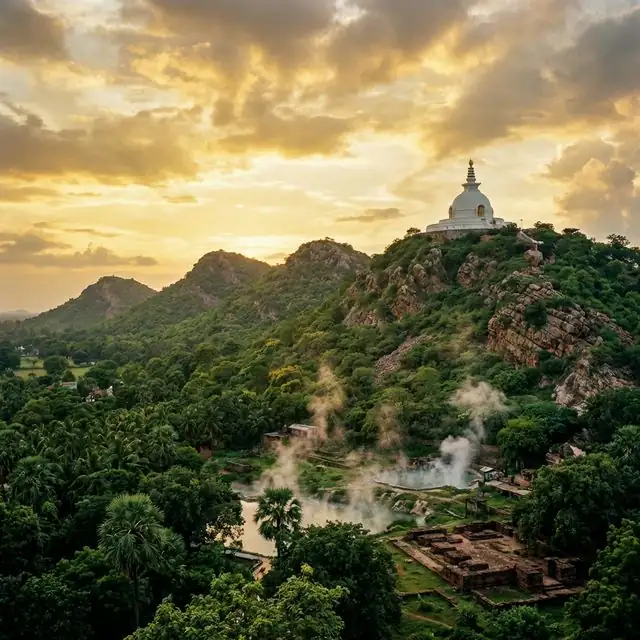
Cradled by five forested hills — Vaibhargiri, Ratnagiri, Saila, Sonagiri, and Udayagiri — Rajgir was the original capital of the Magadh empire, the kingdom that gave India its first emperors, the Buddha his first royal patron (King Bimbisara), and Mahavira his most fertile teaching grounds. Walk the valley today and you walk through the 6th century BCE. The cyclopean stone walls of King Bimbisara's city still ring the hills. The cave where the Buddha is said to have meditated still draws monks at dawn. The hot springs where a thousand pilgrims bathe daily have been bubbling for at least three thousand years.
The valley's signature site is Gridhakuta — Vulture's Peak — a modest rocky outcrop reached by a long stone path winding up Ratnagiri. It looks unremarkable until you remember what was said here. This is where the Buddha delivered the Lotus Sutra, the Heart Sutra, and what scholars consider his most important teachings on emptiness and the nature of reality. For Mahayana Buddhists in Japan, China, Korea, and Vietnam, Vulture's Peak is among the holiest places on earth — many will weep on first arrival. For Theravada Buddhists from Sri Lanka and Southeast Asia, the connection is to King Bimbisara's daily climb up these very stones to receive teaching. The path is the same. The view of the valley unchanged.
Above the valley stands the Vishwa Shanti Stupa — the World Peace Pagoda — a gleaming white marble dome built by Japanese Nipponzan-Myōhōji monks in 1969 as part of a global movement to construct peace pagodas at sites significant to humanity's spiritual heritage. Reached by either an aerial chairlift (the only one in Bihar) or a 1,000-step climb, the stupa offers panoramic views, a quiet meditation hall, and a daily drumming ceremony that echoes across the hills.
Rajgir is also a Jain pilgrimage capital. Lord Mahavira spent fourteen monsoon retreats here, more than at any other place — making this valley arguably the most important Jain site in India after Pawapuri. The marble Jain temples on Sonagiri Hill — twenty-six small shrines reached by a stone path — receive thousands of barefoot pilgrims annually. For Hindus, the Brahmakund hot springs at the base of Vaibhargiri are sacred bathing waters mentioned in the Mahabharata. For archaeologists, the Saptaparni Cave is where the First Buddhist Council convened just months after the Buddha's death — making it, arguably, the place where the Buddhist canon was first compiled and an entire world religion's textual foundation laid down.
For HNI travelers, Rajgir is the breathing space of the Bihar circuit. After the spiritual intensity of Bodh Gaya and the intellectual density of Nalanda, Rajgir offers forest, hot springs, monastery hospitality, and long views over Magadh. It is also the site of the new Nalanda University campus (the 21st-century revival), which can be visited by appointment.
Roots & Rounds curates Rajgir as a two-day pause: a sunrise on Vulture's Peak, an afternoon at the Jain temples, an evening soak at a private hot spring (we arrange exclusive pavilion access for our guests), and a late dinner at a forest-edge property. We work directly with the monks of the Indosan Nipponji at the Vishwa Shanti Stupa, who occasionally allow our guests inside the daily drumming ceremony — an experience that, once you have heard it from inside the dome, you will not forget. The chant is Namu Myōhō Renge Kyō. The drum is taiko. The acoustics inside the marble are unforgettable.
The valley remembers. Spend a few days here and it begins to remember you, too.
A Day in the Life
The Rhythm of Rajgir
Day 1: Pre-dawn pickup. Drive to the base of Vulture's Peak for sunrise meditation.
A transcendent encounter designed to unveil the layers of history and spiritual depth that define this sacred topography.
Aerial chairlift to the Vishwa Shanti Stupa. Attend the drumming ceremony.
A transcendent encounter designed to unveil the layers of history and spiritual depth that define this sacred topography.
Visit the Sonagiri Jain temples — 26 marble shrines along a hill path.
A transcendent encounter designed to unveil the layers of history and spiritual depth that define this sacred topography.
Private soak at the Brahmakund hot spring pavilion.
A transcendent encounter designed to unveil the layers of history and spiritual depth that define this sacred topography.
Optional sunrise walk to the Saptaparni Cave — site of the First Council.
A transcendent encounter designed to unveil the layers of history and spiritual depth that define this sacred topography.
Drive 15 km to Nalanda Mahavihara for a scholar-led ruins walk.
A transcendent encounter designed to unveil the layers of history and spiritual depth that define this sacred topography.
Visit Bimbisara Jail and Pippala Stone House.
A transcendent encounter designed to unveil the layers of history and spiritual depth that define this sacred topography.
Farewell dinner at the Indo Hokke.
A transcendent encounter designed to unveil the layers of history and spiritual depth that define this sacred topography.
Curated Experiences
What You'll Experience

Spiritual & Historical Walks
Griddhakuta (Vulture's Peak) Sunrise Meditation
Sunrise ascent and guided meditation at Griddhakuta — where the Buddha delivered the Prajnaparamita Sutra.

Spiritual & Historical Walks
Vishwa Shanti Stupa Circumambulation
Guided ritual circumambulation of the Japanese-built World Peace Stupa with chanting and seated contemplation.

Spiritual & Historical Walks
Brahmakund Hot Springs Therapeutic Soak
Private use of ancient natural hot-water springs (flowing 2,000+ years). HNI arrangement includes private enclosure.
Spiritual & Historical Walks
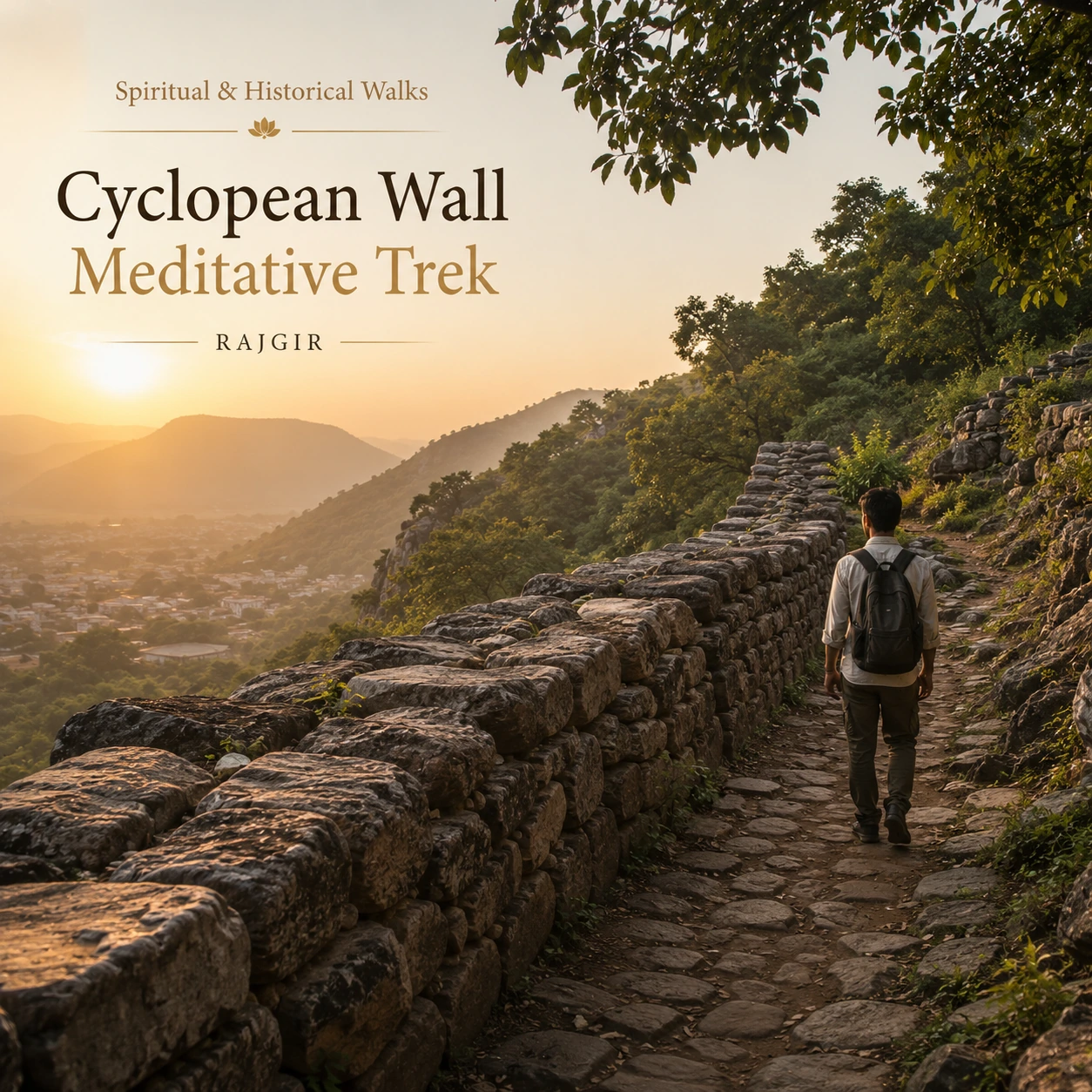
Cyclopean Wall Meditative Trek
Guided walk along sections of the ancient Cyclopean Wall — megalithic fortifications of Magadha Empire.
Spiritual & Historical Walks
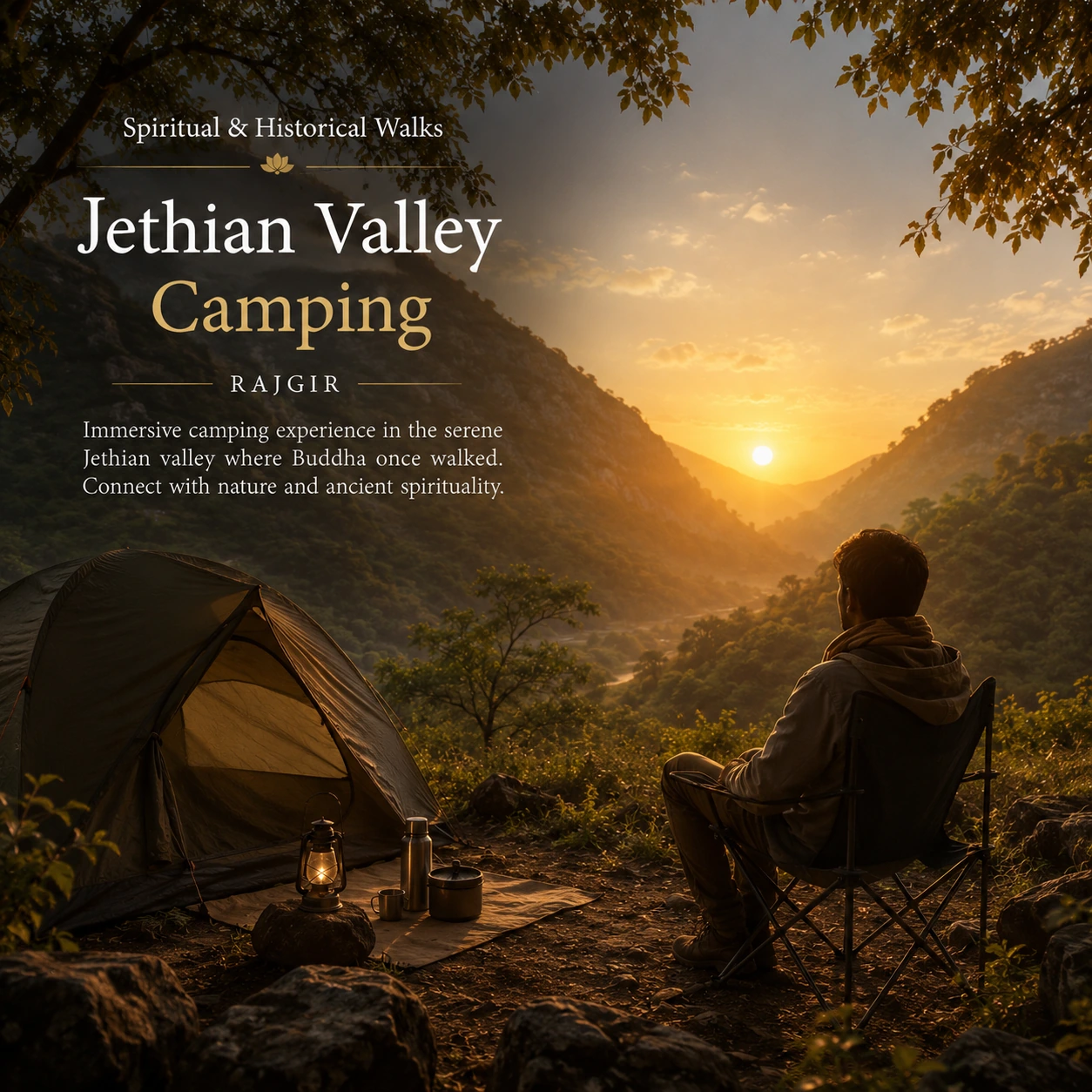
Jethian Valley Camping
Immersive camping experience in the serene Jethian valley where Buddha once walked. Connect with nature and ancient spirituality.
Scholarly Retreats
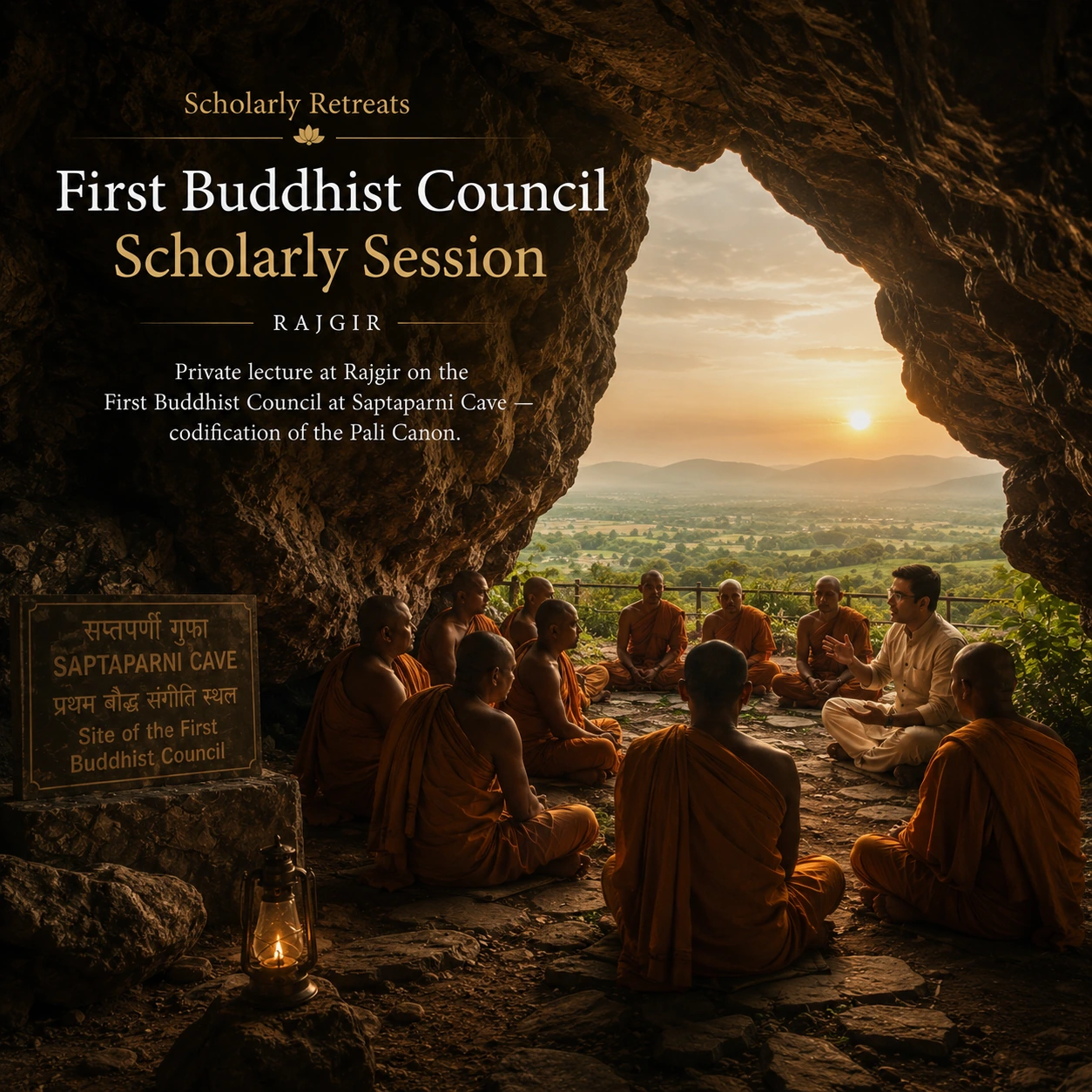
First Buddhist Council Scholarly Session
Private lecture at Rajgir on the First Buddhist Council at Saptaparni Cave — codification of the Pali Canon.
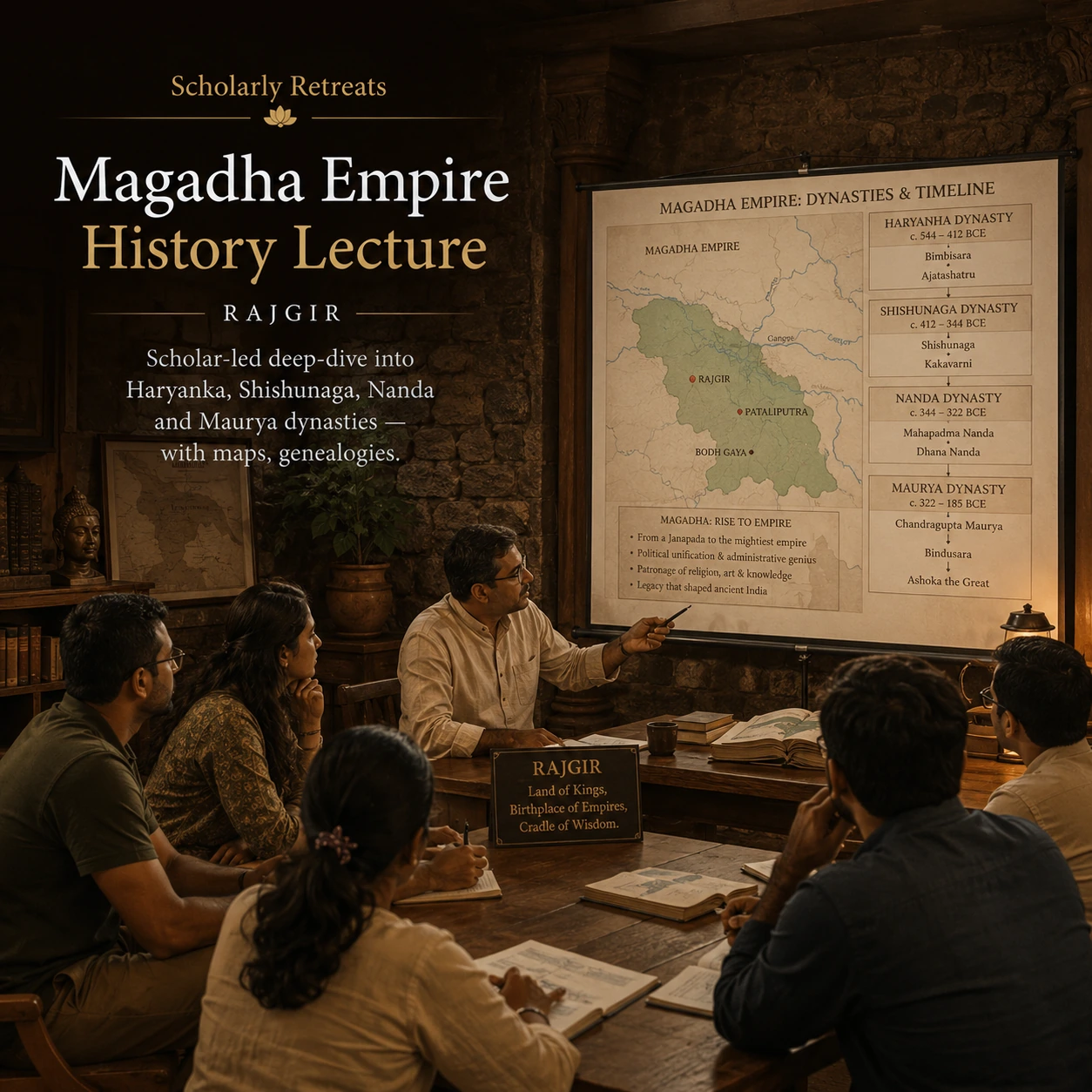
Scholarly Retreats
Magadha Empire History Lecture
Scholar-led deep-dive into Haryanka, Shishunaga, Nanda and Maurya dynasties — with maps, genealogies.
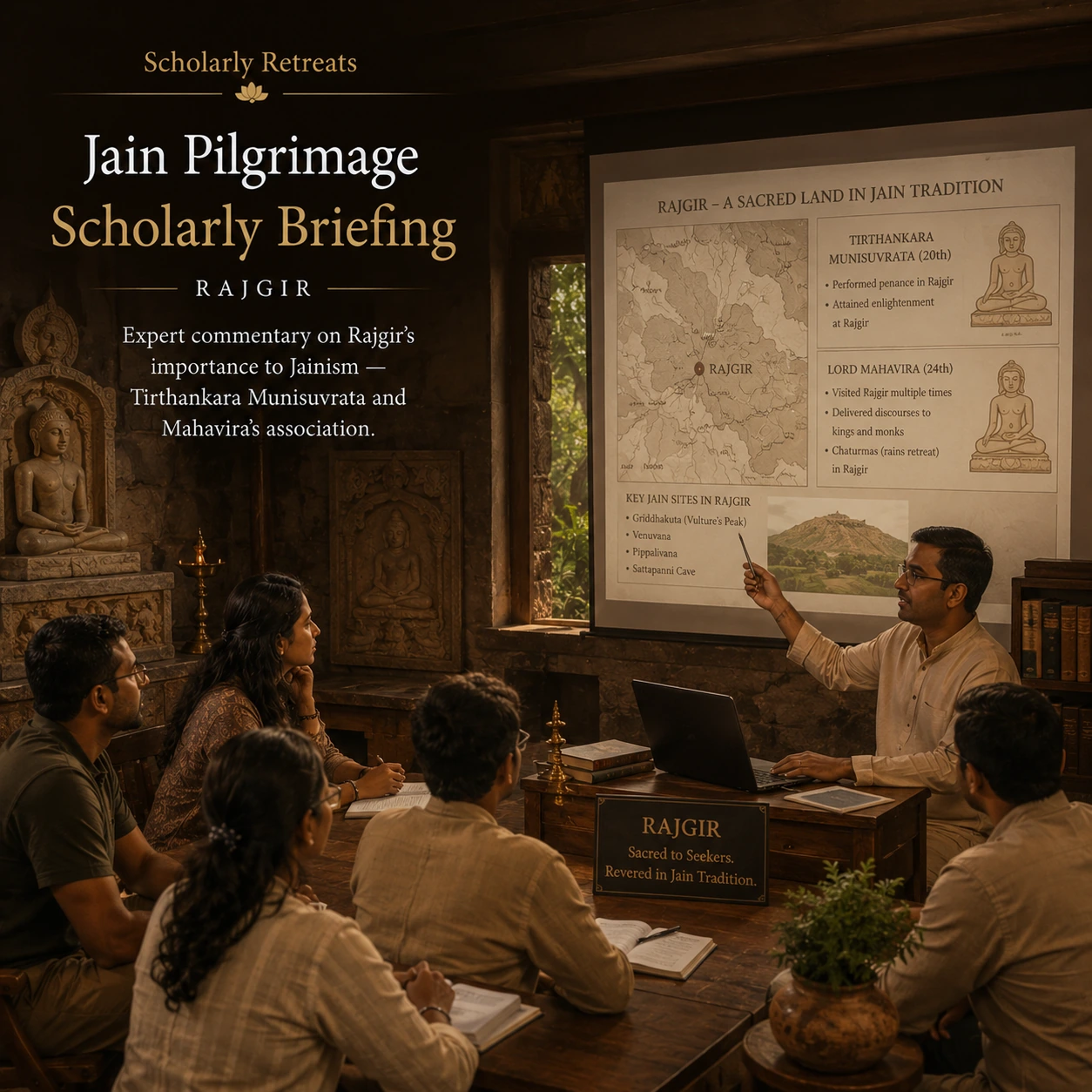
Scholarly Retreats
Jain Pilgrimage Scholarly Briefing
Expert commentary on Rajgir's importance to Jainism — Tirthankara Munisuvrata and Mahavira's association.
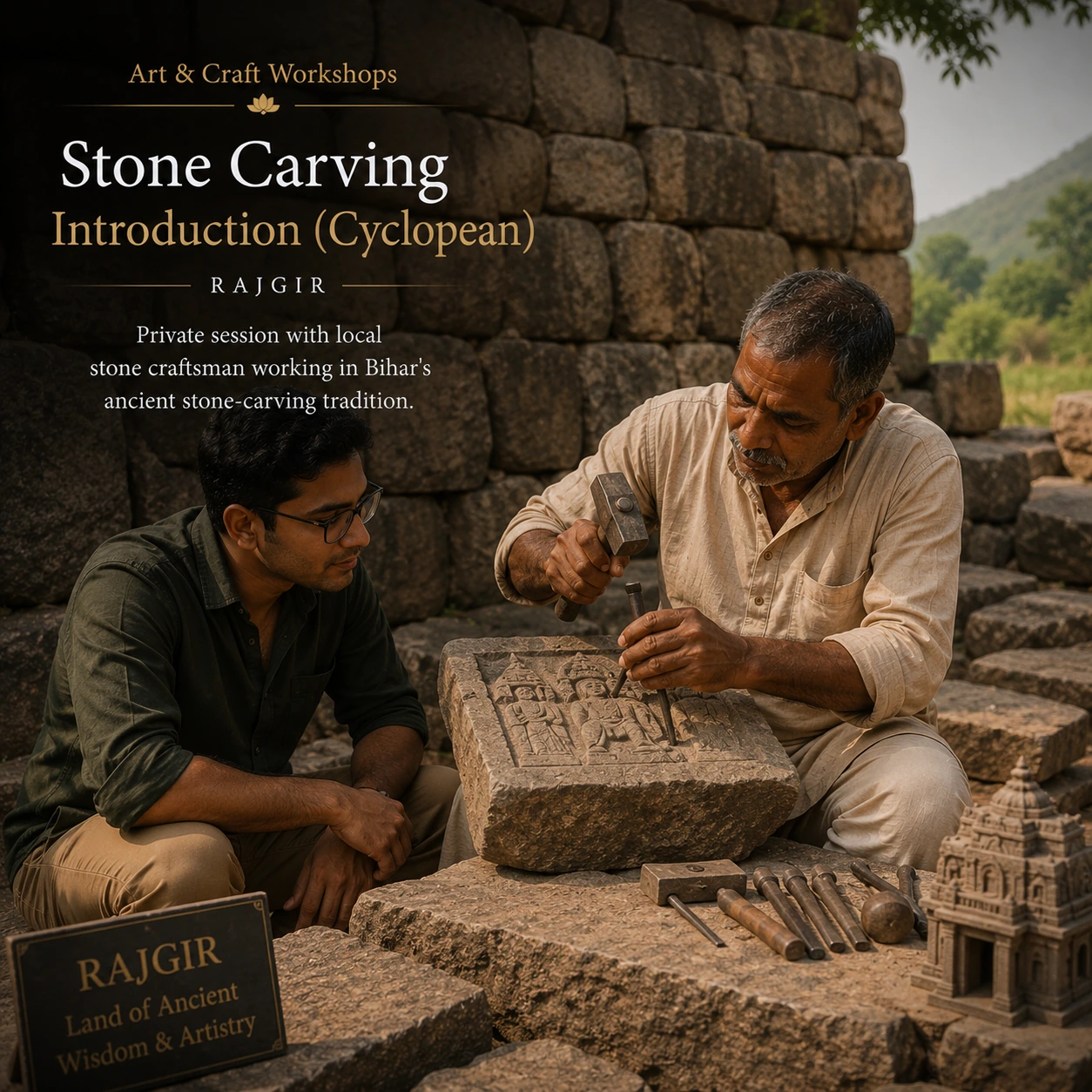
Art & Craft Workshops
Stone Carving Introduction (Cyclopean)
Private session with local stone craftsman working in Bihar's ancient stone-carving tradition.
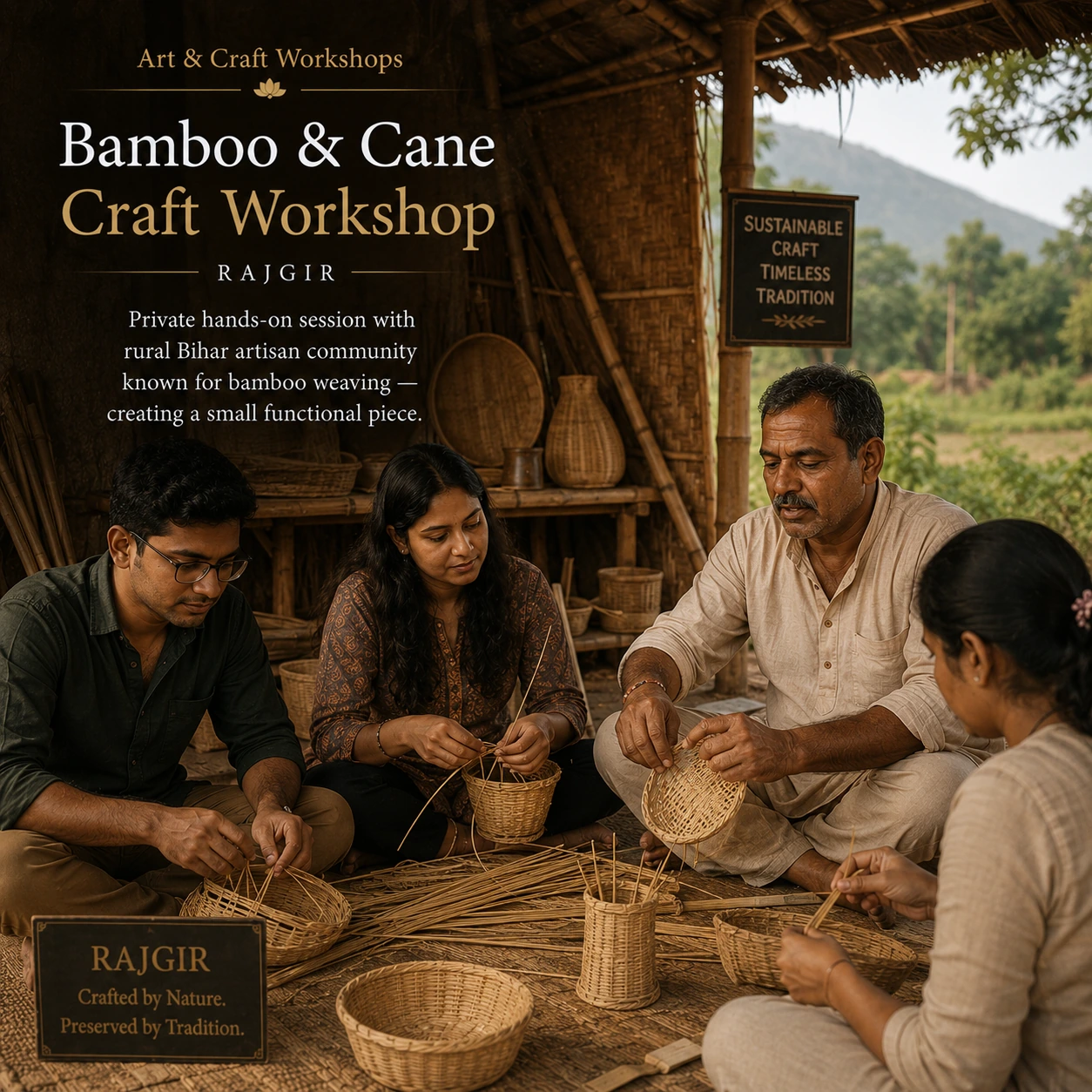
Art & Craft Workshops
Bamboo & Cane Craft Workshop
Private hands-on session with rural Bihar artisan community known for bamboo weaving — creating a small functional piece.
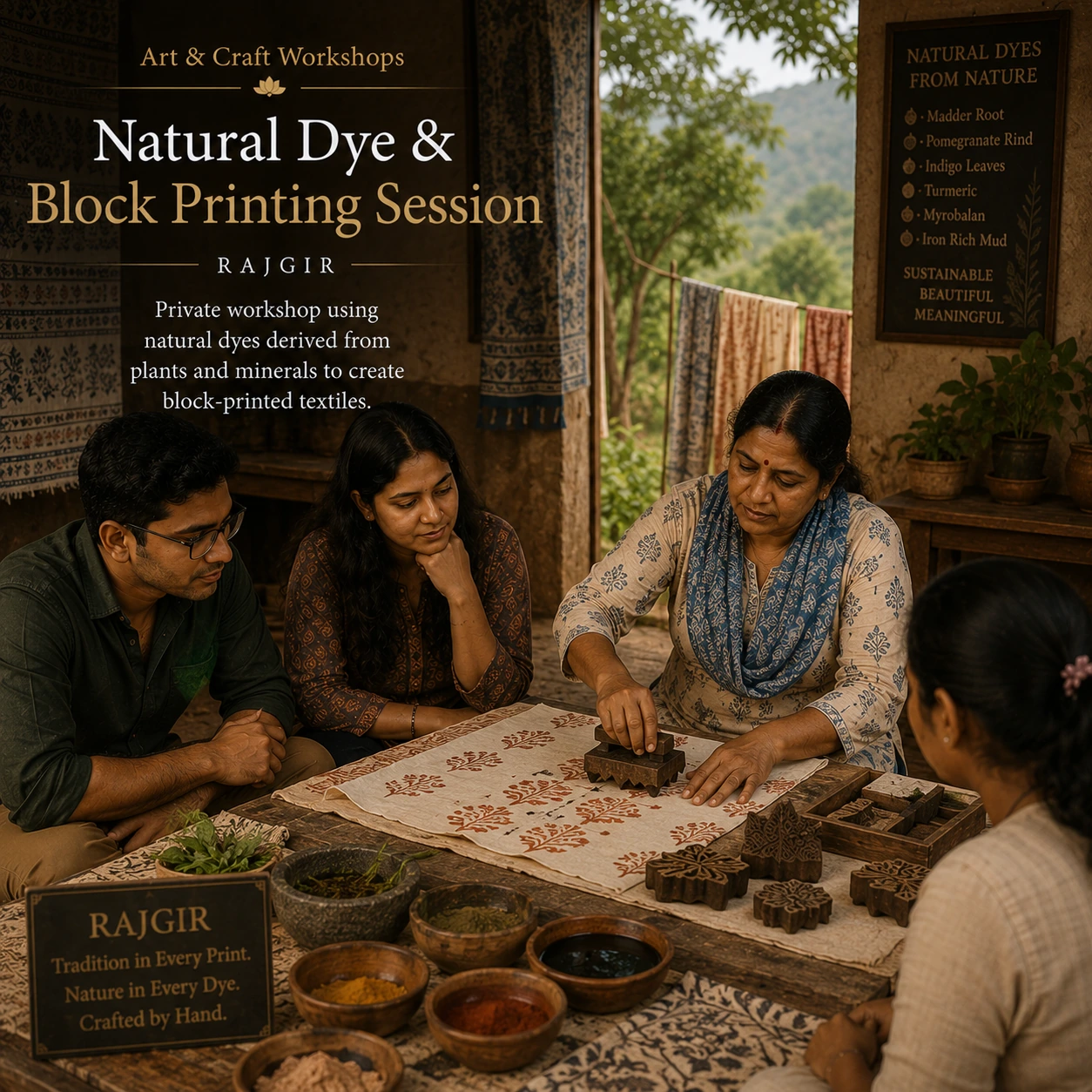
Art & Craft Workshops
Natural Dye & Block Printing Session
Private workshop using natural dyes derived from plants and minerals to create block-printed textiles.

Festival Immersions
Rajgir Mahotsav VIP Access
Private facilitated access to the Rajgir Mahotsav — multi-day festival of classical music, dance, cultural performances.
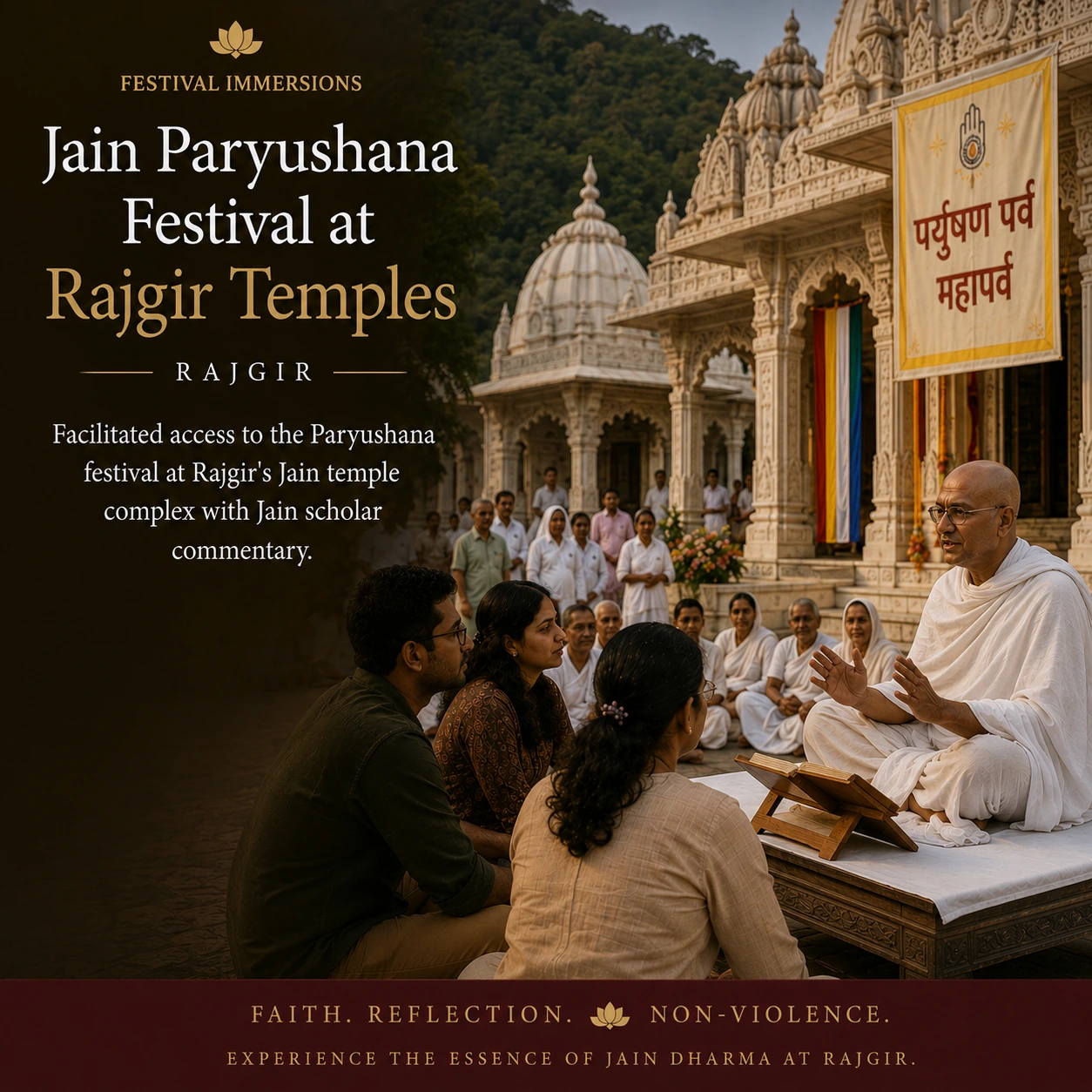
Festival Immersions
Jain Paryushana Festival at Rajgir Temples
Facilitated access to the Paryushana festival at Rajgir's Jain temple complex with Jain scholar commentary.
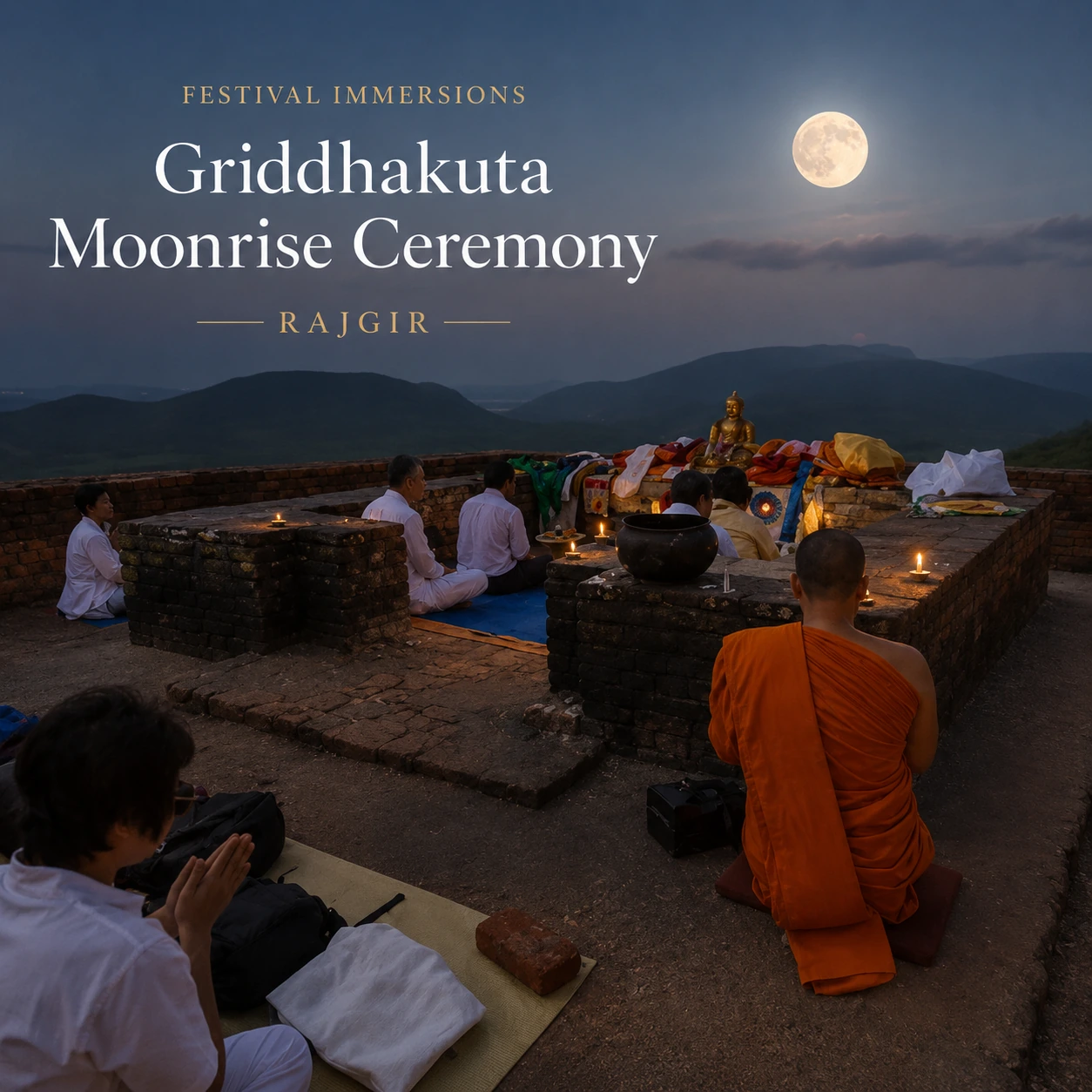
Festival Immersions
Griddhakuta Moonrise Ceremony
Private scholar-led gathering at Vulture's Peak on a full-moon night — chanting, meditation recreating the Buddha's assemblies.
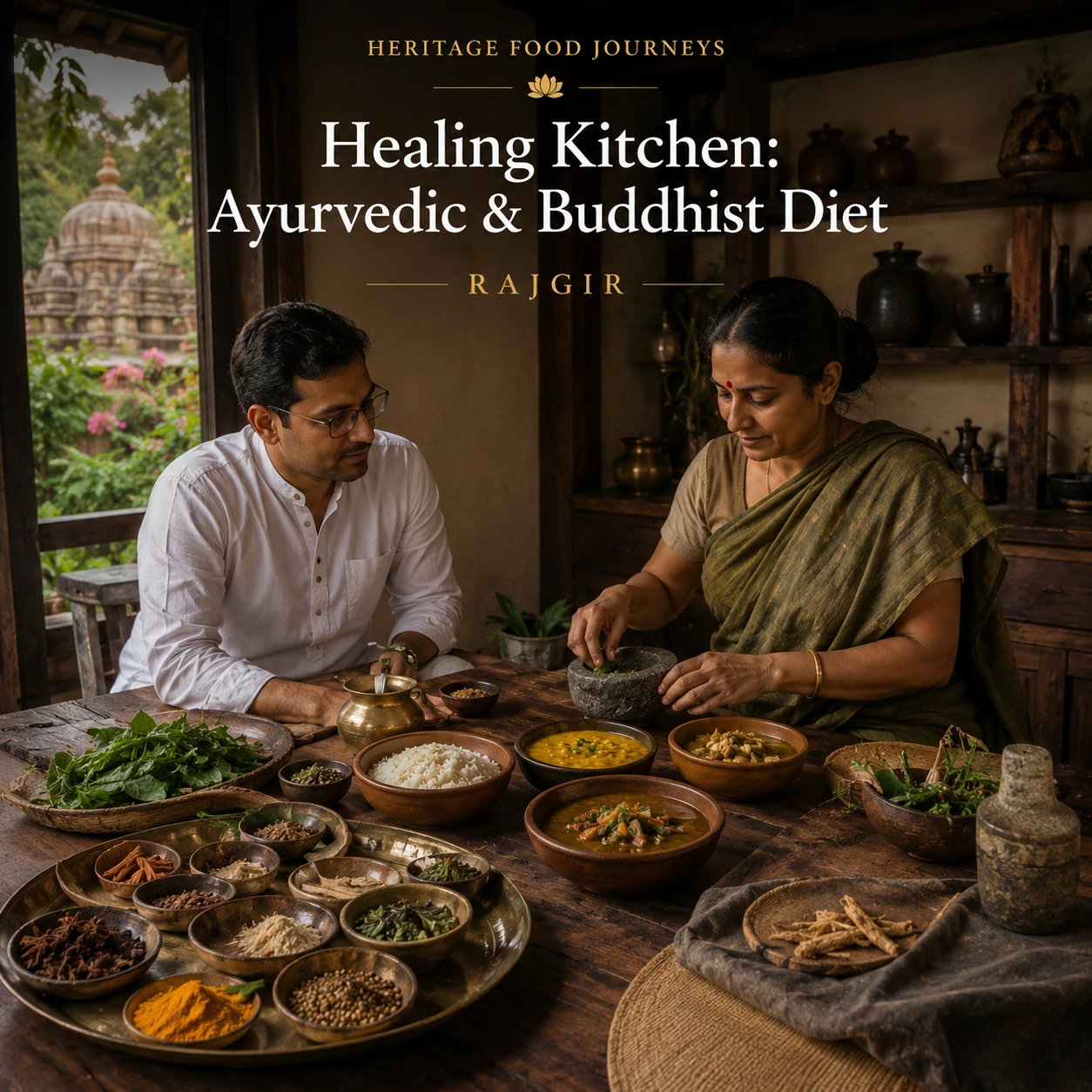
Heritage Food Journeys
Healing Kitchen: Ayurvedic & Buddhist Diet
Private session with Ayurvedic practitioner and cook at heritage wellness property — meal based on Ayurvedic principles.

Heritage Food Journeys
Jungle Heritage Cuisine Experience
Private outdoor dining near Rajgir's forested hills — dishes inspired by forest food traditions of ancient Magadha.
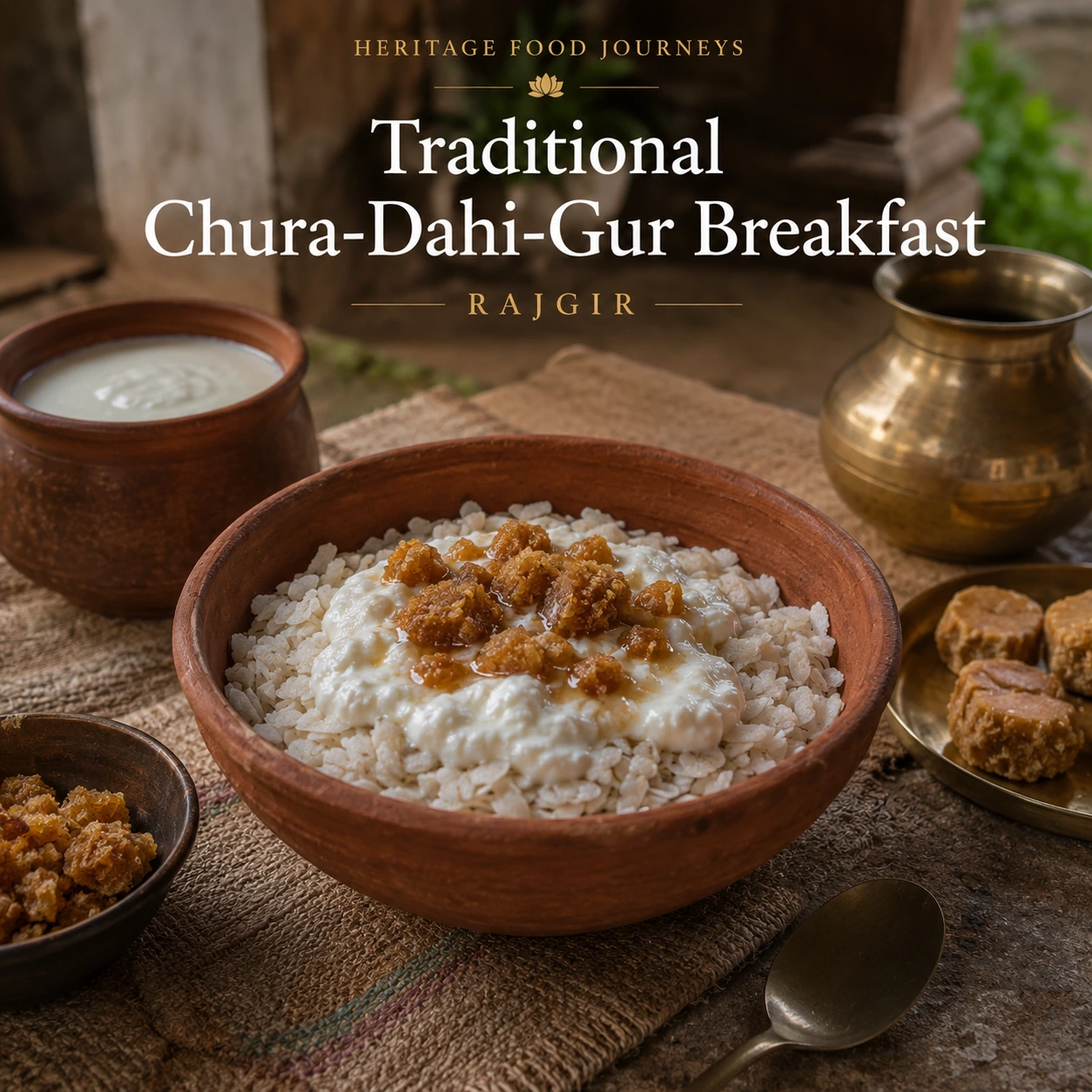
Heritage Food Journeys
Traditional Chura-Dahi-Gur Breakfast
Authentic rural Bihar farmhouse breakfast of flattened rice, fresh curd and jaggery — ancient breakfast of Magadha.
Before You Go
Practical Information
Best Time to Visit
October – March (October especially, for the Rajgir Mahotsav festival)
Avoid
April – June (45°C in valley); July – September (hill paths slippery)
Getting Here
Patna (PAT) → 100 km / 2.5-hr drive; Gaya (IXW) → 80 km / 2 hrs.
Recommended Stay
1–2 nights minimum; ideal as a base for Nalanda day-trip
Where to Stay
Indo Hokke Hotel (Japanese-owned, onsen-style baths), Hotel Tathagat Vihar, or boutique heritage homestays.
Sacred Etiquette
Shoulders & knees covered; shoes removed at Jain temples; silence on Vulture's Peak path.
Photography
Permitted at most sites; prohibited inside Saptaparni Cave and during Stupa ceremonies.
Mobility Notes
Palanquin carriers available for Vulture's Peak; chairlift for the Peace Pagoda.
Health & Safety
Hot springs are 40–45°C — short soaks recommended.
Festivals to Catch
Rajgir Mahotsav (late October); Buddha Purnima (May) at Vulture's Peak.
Languages You'll Hear
Hindi, Magahi, Japanese, Tibetan, English
The drumming inside the World Peace Pagoda — that hour will stay with us for the rest of our lives. Our guide didn't introduce us to the monks. He introduced them to us.
— Yuki & Hiroshi Tanaka, Kyoto · Spiritual Journey, January 2025
Begin Your Exploration
Ready to breathe in the Sacred Valley?
Sunrise at Vulture's Peak, a Japanese drum at noon, and a hot-spring soak at dusk — let our specialists craft your two days in Rajgir.