— Bihar's Sacred Heart —
Bodh Gaya
Where a Tree, a Throne, and One Long Night Changed the World
Best Time
October – March
Recommended Stay
2–3 nights
Nearest Airport
Gaya (IXW), 17 km
Heritage Status
UNESCO World Heritage Site
The Story
The Tree, the Throne, and the Awakening
“In a small grove of fig trees on the banks of the Niranjana, a thirty-five-year-old wanderer sat down with a vow not to rise until he had understood. The world has not been the same since.”
In 528 BCE, on a full-moon night in May, a thirty-five-year-old wanderer named Siddhartha Gautama settled beneath a peepal tree in what was then a quiet riverside grove on the banks of the Niranjana. He had spent six years searching — through palace privilege, through the most extreme austerities his teachers could devise, through the company of the wisest men of his age — and had found none of it sufficient. He chose this spot, this tree, and this night to stop searching.
By dawn, he was the Buddha. The grove became Bodh Gaya. The tree became the Bodhi Tree. And what followed was not a religion, at first, but a slow, patient unfolding of teaching across northern India and, eventually, half the world.
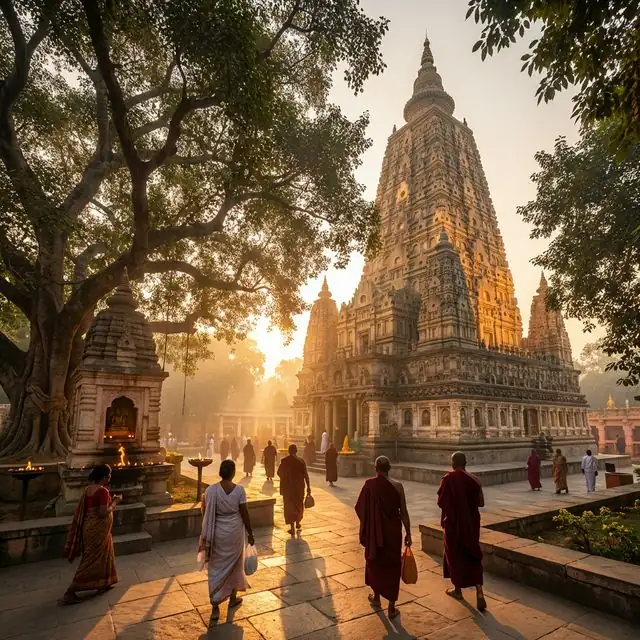
Today, Bodh Gaya holds that moment in stone, gold, and silence. At its heart stands the Mahabodhi Temple: a fifty-metre tower of intricately carved sandstone, first built by the Emperor Ashoka in the 3rd century BCE and reconstructed in its current form around the 5th–6th century CE. UNESCO inscribed it as a World Heritage Site in 2002 — one of the few surviving examples of brick architecture from late Gupta India, and arguably the most spiritually charged structure in Asia.
But Bodh Gaya is far more than a single temple. It is a living international Buddhist quarter. Around the Mahabodhi complex, you will find monasteries, temples, and meditation centres built and maintained by Bhutan, Thailand, Myanmar, Japan, China, Tibet, Vietnam, Sri Lanka, Cambodia, Korea, and Nepal — each in its own architectural language, each housing monks who have travelled here to meditate where the Buddha did. Wander among them at dawn and you will hear ten traditions chanting at once: a quiet, layered murmur unlike anywhere else on earth.
The town itself is small. The pilgrim path is walkable. And the most meaningful moments are not the photographed ones. They are the long quiet hours under the descendant of the original Bodhi Tree — transplanted from Sri Lanka in the 19th century after the original was lost to monsoon and a queen's misguided affection — watching pilgrims from a dozen nations sit in stillness side by side.
For HNI travelers from Tokyo, Bangkok, Munich, or Manhattan, Bodh Gaya offers something rare in modern luxury travel: a destination where silence is the activity. There are no nightclubs. No must-do bucket-list selfies. Just a tree, a temple, and a current of human attention that has not stopped flowing for two and a half millennia.
The Dalai Lama returns most winters to teach here, drawing tens of thousands of practitioners. The great prayer festivals — the Kagyu Monlam, the Nyingma Monlam — fill the town with maroon robes from December through February. In the off-season, you can have the inner sanctum almost to yourself at 5:30 AM, sharing it only with a handful of monks and a few visiting practitioners from Yangon or Kyoto.
Roots & Rounds curates Bodh Gaya journeys with scholar-monks, retired professors of Pali and Sanskrit, and certified meditation teachers who have spent decades here. They do not recite Wikipedia. They will tell you which step on the eastern terrace is where Ashoka's diamond throne (the Vajrasana) once stood; which Bodhi leaf you should press into your journal and why; and how to sit so the heat of the marble does not break your concentration.
We pair Bodh Gaya with private dawn meditations, scholar-led walks of the seven post-enlightenment stations, monastery hospitality across the international quarter, and — for those who wish — brief residential stays at one of the meditation centres for travelers seeking depth beyond a tour.
Come for the temple. Stay for the silence. Leave changed — or, as the Buddha would prefer to put it, with one less illusion than you arrived with.
A Day in the Life
The Rhythm of Bodh Gaya
Hotel pickup. Drive to Mahabodhi as the first chants begin.
A transcendent encounter designed to unveil the layers of history and spiritual depth that define this sacred topography.
Private meditation sitting beneath the Bodhi Tree with your scholar-guide.
A transcendent encounter designed to unveil the layers of history and spiritual depth that define this sacred topography.
Breakfast at a Tibetan-run café — homemade Bhutanese ema datshi or simple porridge with butter tea.
A transcendent encounter designed to unveil the layers of history and spiritual depth that define this sacred topography.
Walking tour of the Mahabodhi outer complex: votive stupas, Animeshlochan Chaitya, Cankamana, and the seven post-enlightenment stations.
A transcendent encounter designed to unveil the layers of history and spiritual depth that define this sacred topography.
Visit the Bhutanese, Royal Thai, and Indosan Nipponji (Japanese) monasteries.
A transcendent encounter designed to unveil the layers of history and spiritual depth that define this sacred topography.
Lunch at the 80-year-old Sujata Café or vegetarian thali at a monastery refectory.
A transcendent encounter designed to unveil the layers of history and spiritual depth that define this sacred topography.
Optional: drive to Sujata Stupa and the Niranjana riverbank.
A transcendent encounter designed to unveil the layers of history and spiritual depth that define this sacred topography.
Return to Mahabodhi for evening lamp-lighting and the daily puja.
A transcendent encounter designed to unveil the layers of history and spiritual depth that define this sacred topography.
Private dinner with your guide at the hotel — a quiet debrief.
A transcendent encounter designed to unveil the layers of history and spiritual depth that define this sacred topography.
Curated Experiences
What You'll Experience
Spiritual & Historical Walks
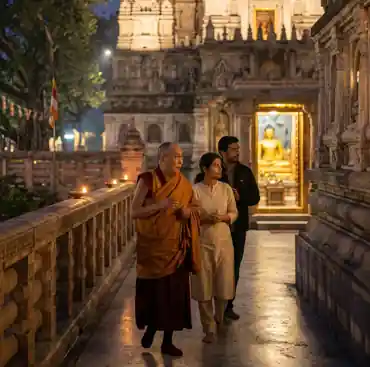
Pre-Dawn Mahabodhi Temple Access
Exclusive entry to the UNESCO Mahabodhi complex before public opening. Private circumambulation of sanctum with senior monk guide.
Spiritual & Historical Walks
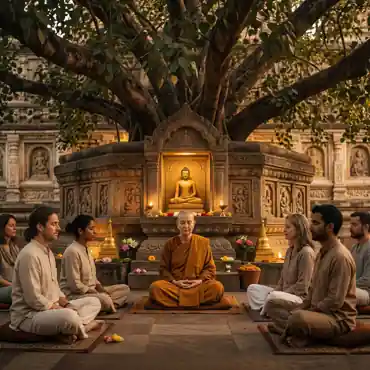
Seated Meditation Under the Bodhi Tree
Guided Vipassana/Samatha meditation directly beneath the Sacred Bodhi Tree at Vajrasana with a resident Buddhist practitioner.
Spiritual & Historical Walks
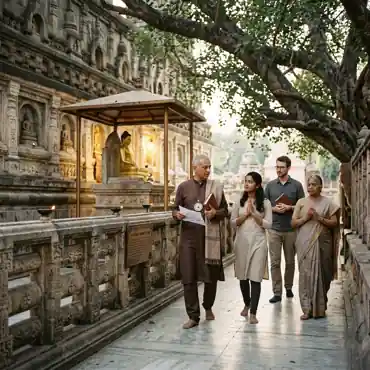
Vajrasana Circumambulation
Scholar-led ceremonial walking meditation around the Diamond Throne — exact spot of the Buddha's enlightenment.
Spiritual & Historical Walks
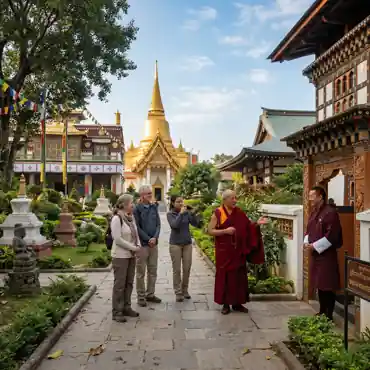
Multi-Monastery Circuit Walk
Private guided walk through the international monastery belt (Thai, Japanese, Tibetan, Bhutanese) with monk introductions.
Spiritual & Historical Walks
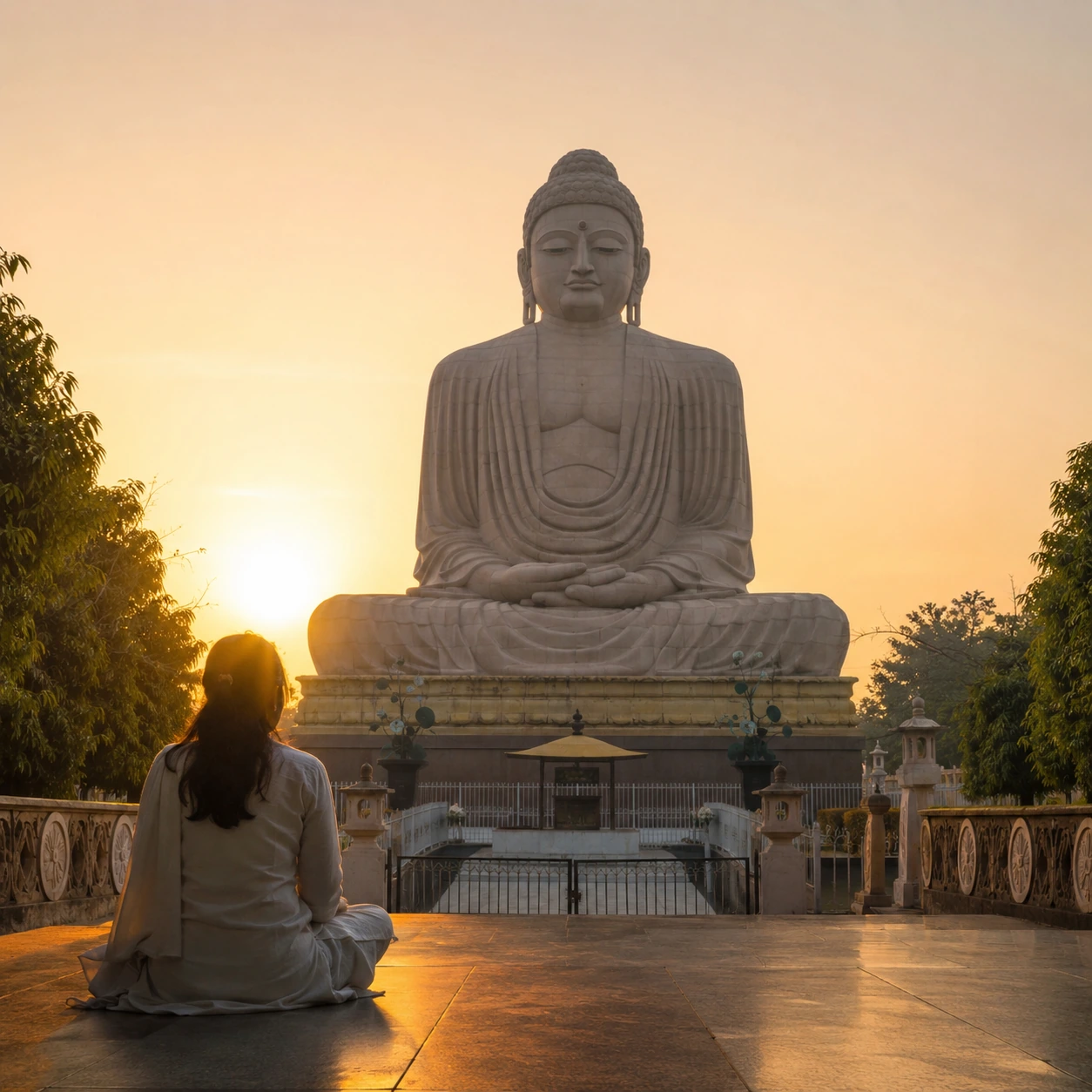
Great Buddha Statue Sunrise Contemplation
Private access to the 80-ft Great Buddha Statue at sunrise with scholar-guide on Ambedkarite Buddhism.
Spiritual & Historical Walks
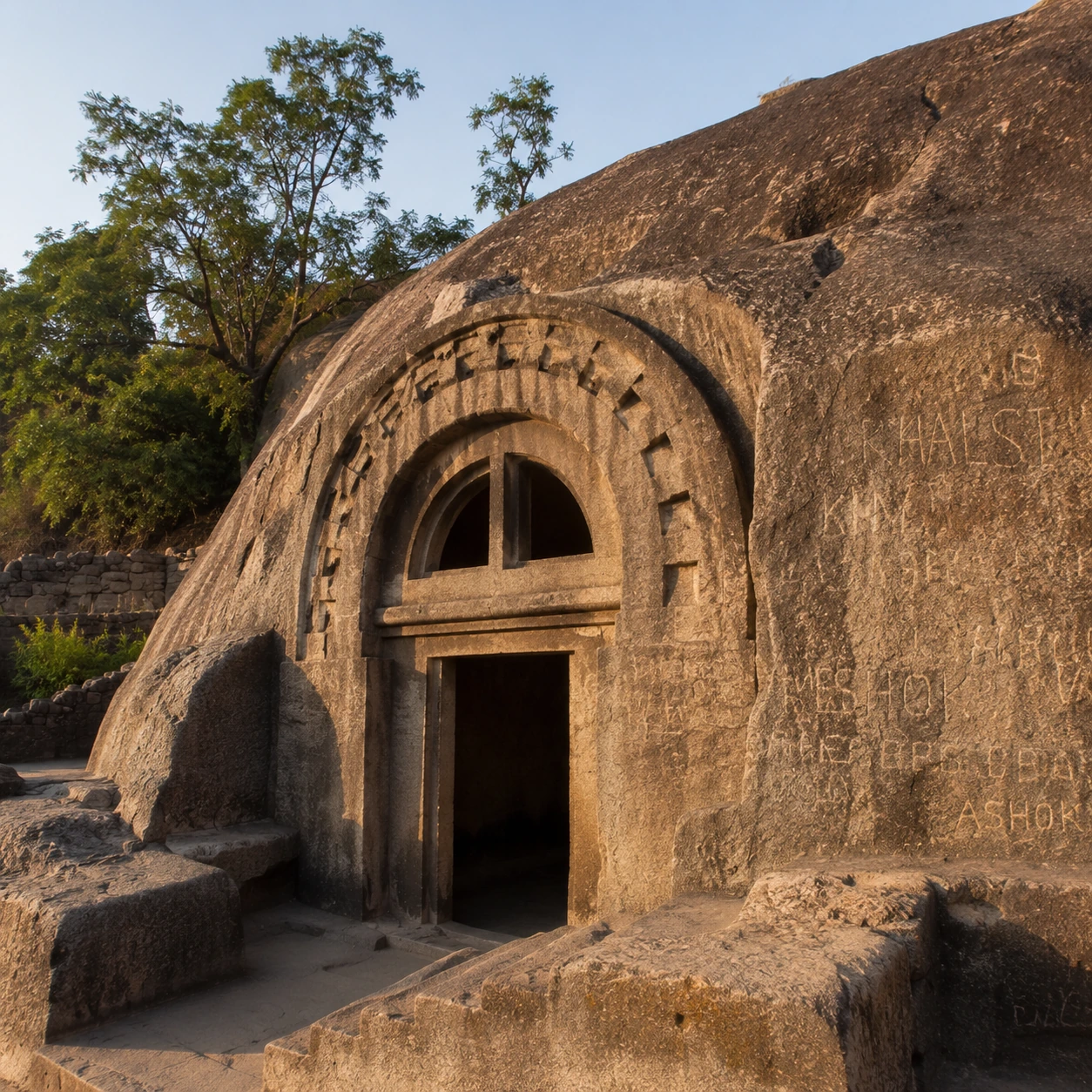
Barabar Caves Expedition
An exclusive trip to the Barabar Hill Caves — the oldest surviving rock-cut caves in India, dating from the Maurya Empire — 24 km north of Gaya.
Scholarly Retreats
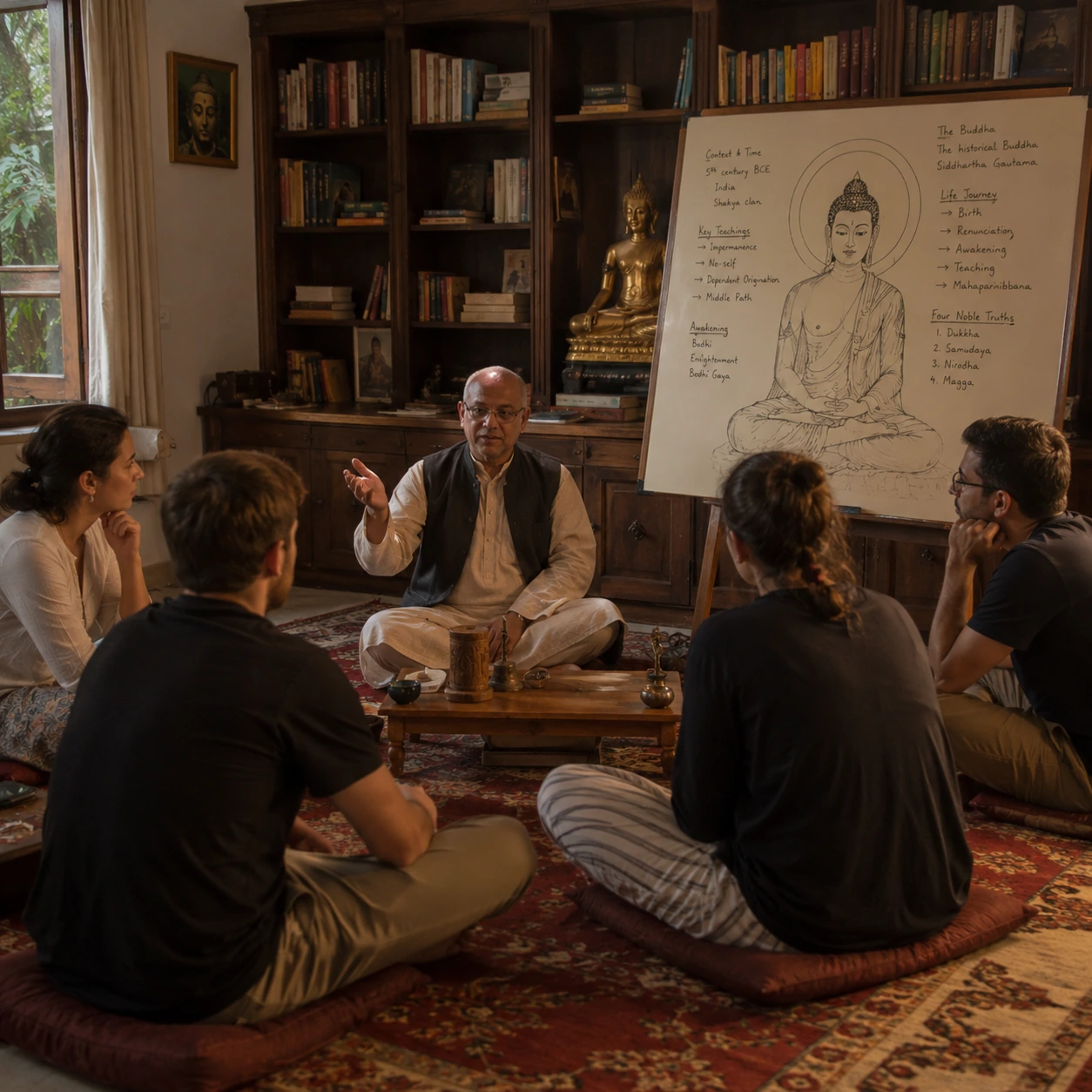
Private Scholar Lecture: Life of the Buddha
One-on-one/small-group lecture by resident Buddhist scholar on historical & philosophical dimensions of the Buddha's awakening.
Scholarly Retreats
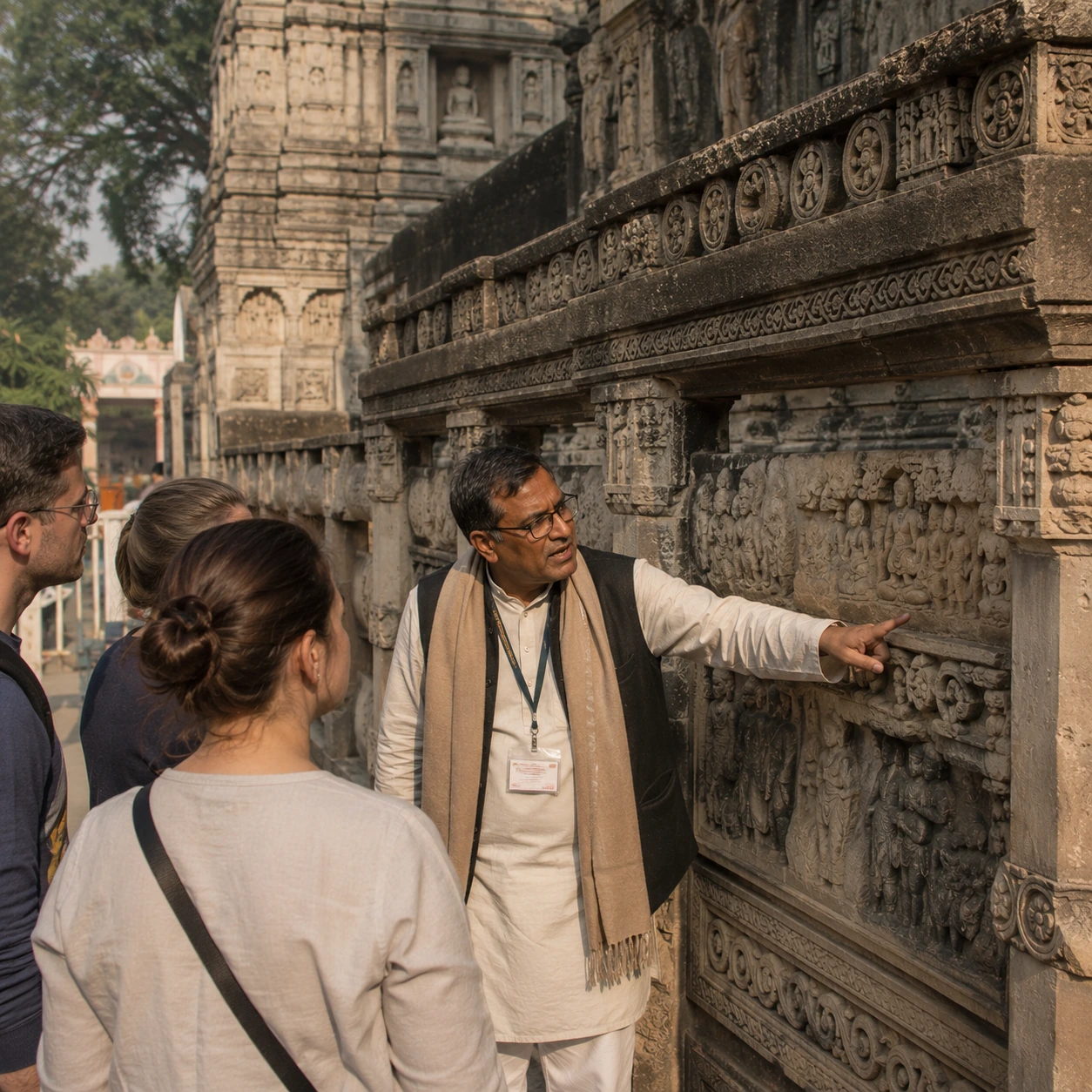
Buddhist Iconography Deep-Dive at Mahabodhi
Expert iconographic reading of the Mahabodhi Temple's sculptural programme — railings, torana, relief panels.
Scholarly Retreats
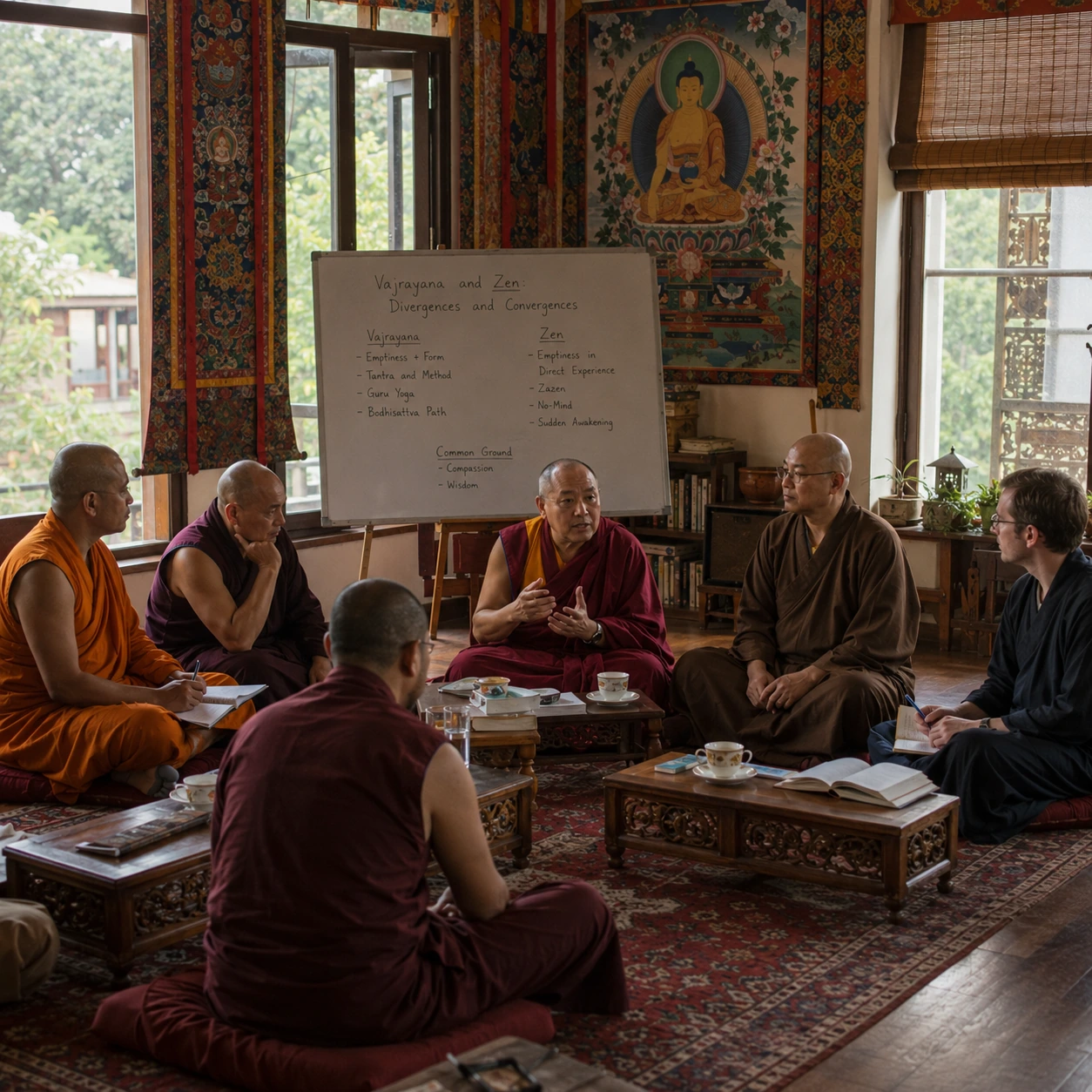
International Monastery Theology Session
Facilitated cross-tradition dialogue with monks exploring divergences in Vajrayana and Zen.
Art & Craft Workshops
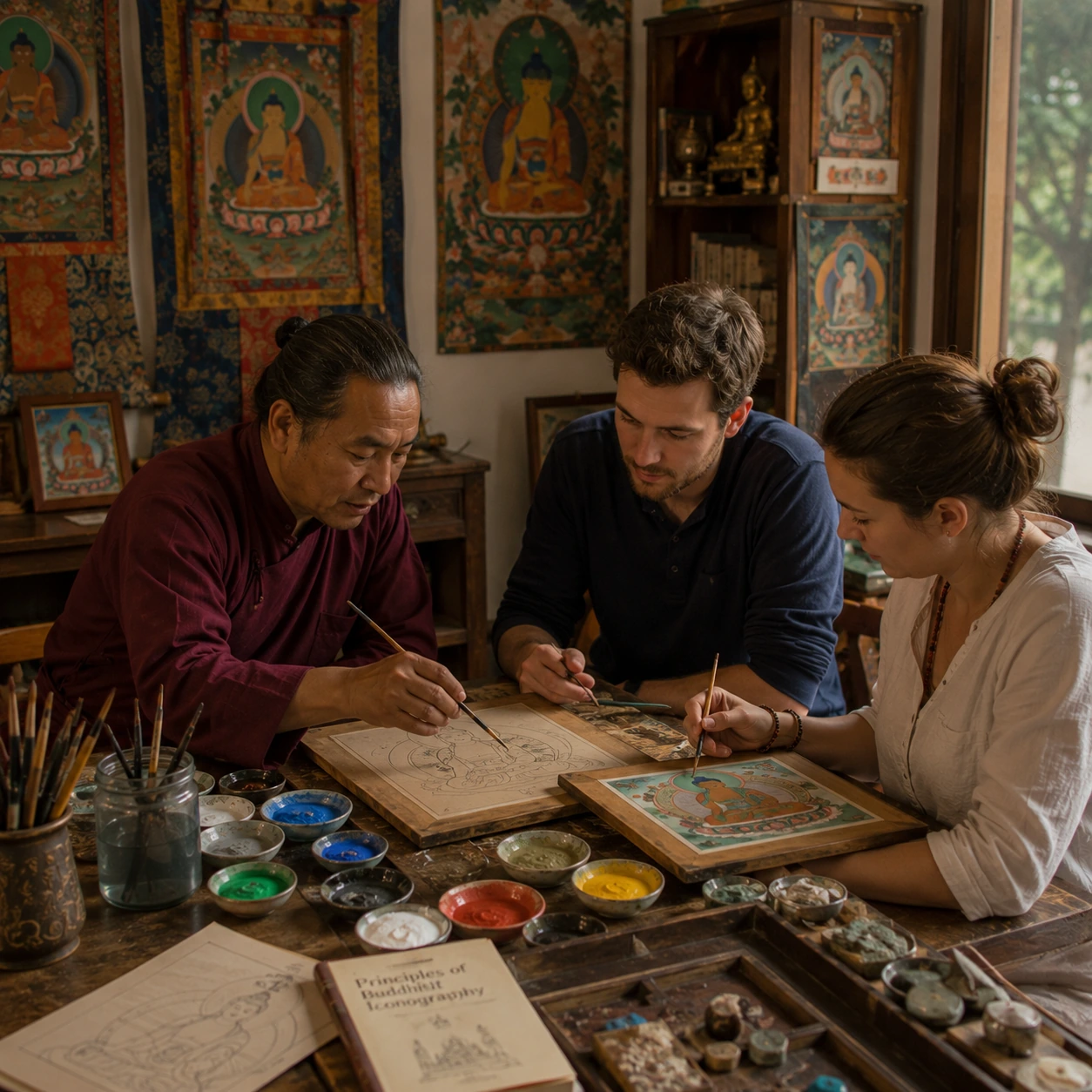
Buddhist Thangka Art Introduction
Private session with a Tibetan thangka painter — mineral pigments, iconographic principles. Guests complete a simple composition.
Art & Craft Workshops
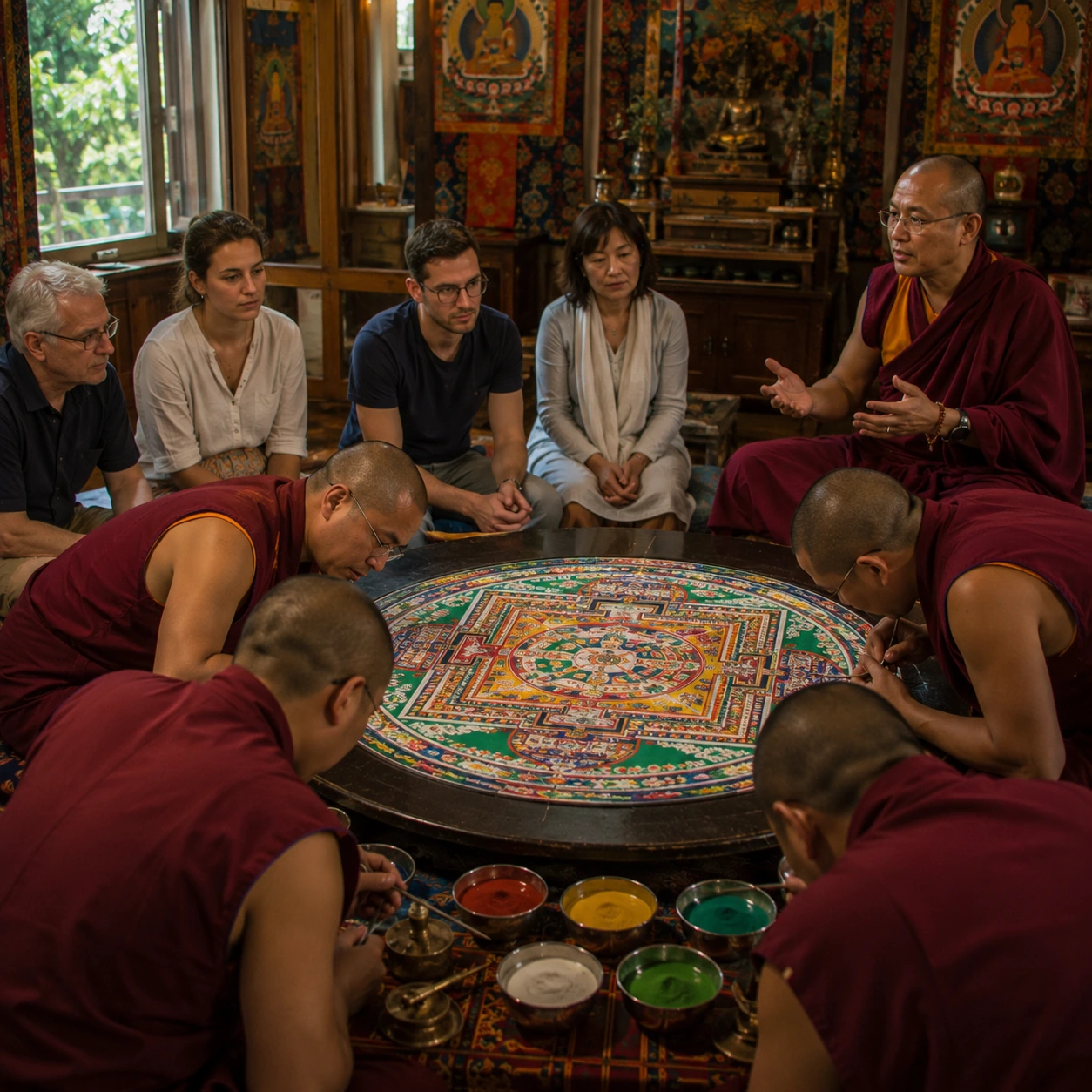
Sand Mandala Observation & Participation
Exclusive access to witness/participate in sand mandala creation by Tibetan monks with monk explanation.
Art & Craft Workshops
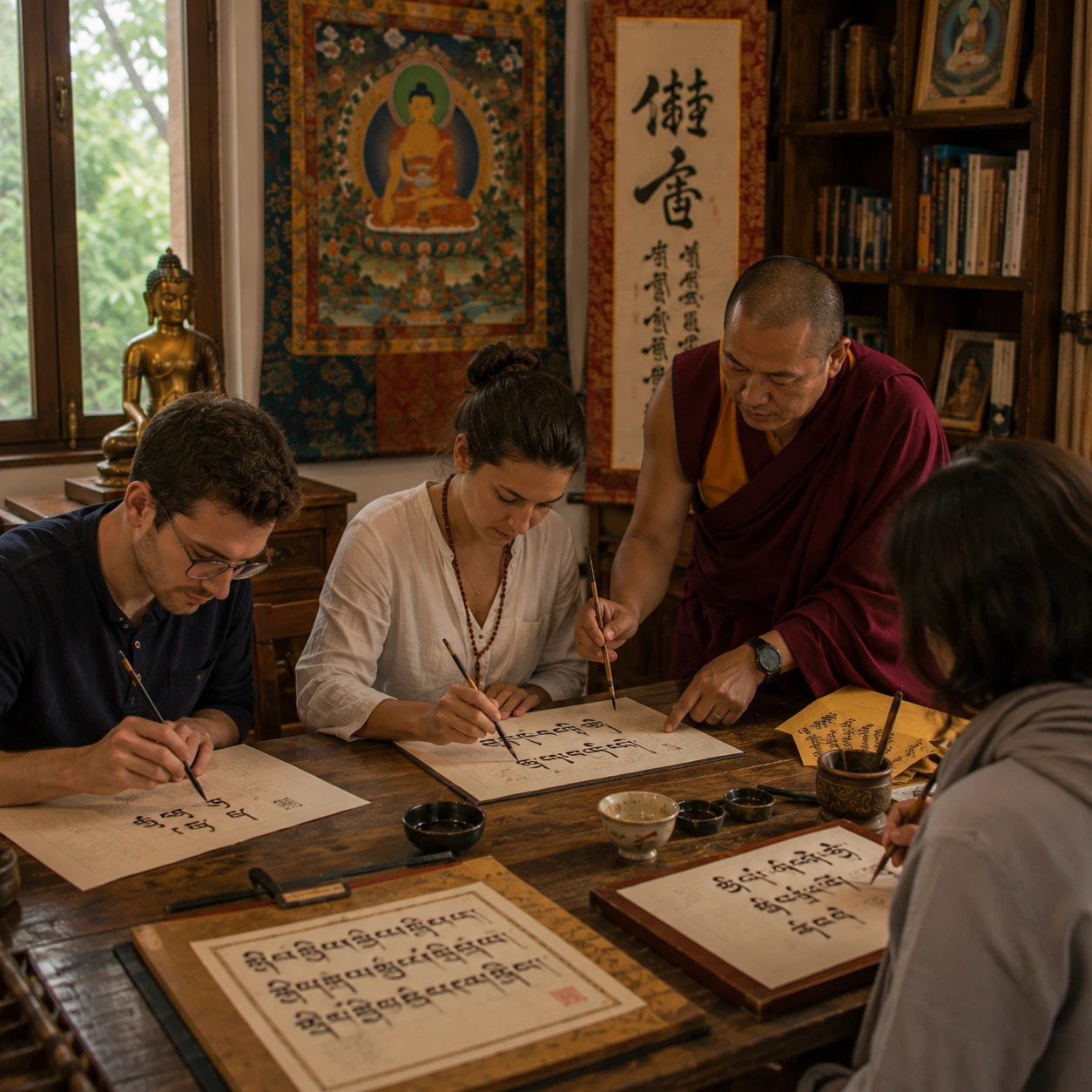
Buddhist Calligraphy Workshop
Private session learning Tibetan or Pali script calligraphy with a resident monastic artist. Personalised blessing scroll.
Festival Immersions
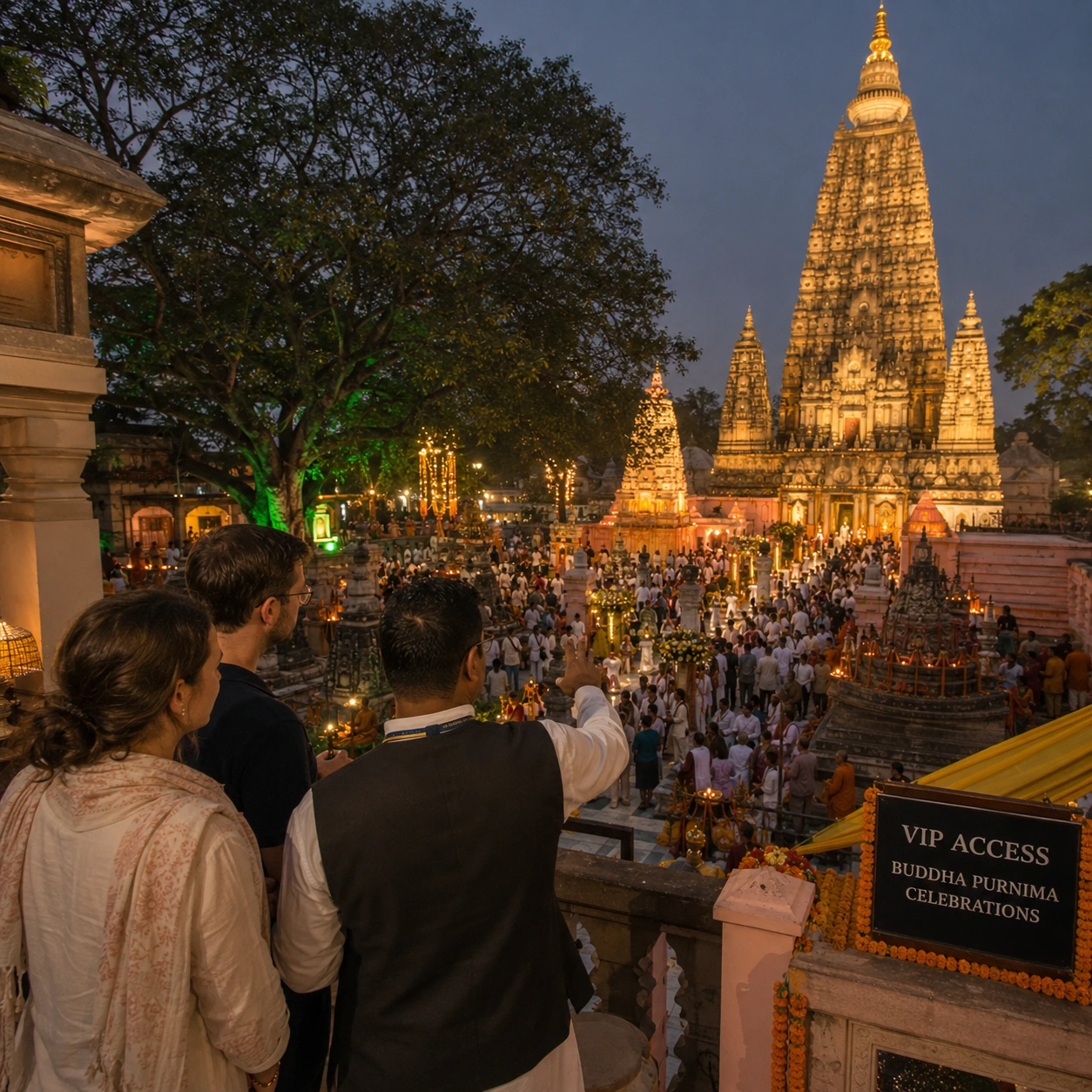
Buddha Purnima Festival Access (VIP)
Private facilitated access to Mahabodhi Temple's Buddha Purnima celebrations — pre-dawn ceremony access.
Festival Immersions
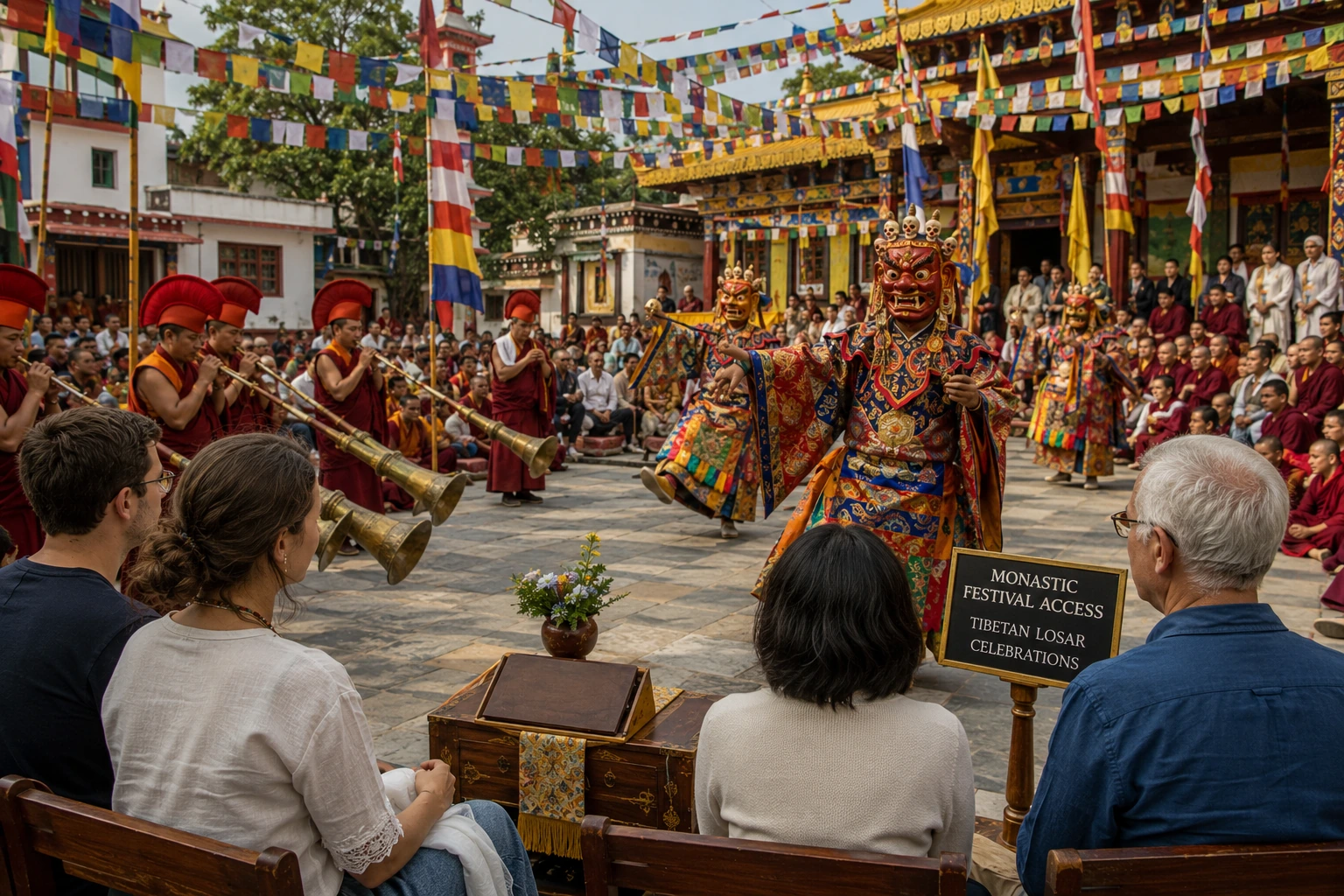
Monastic Festival Calendar Event Access
Exclusive access through monastery partnerships to major festivals — Tibetan Losar, Japanese Obon, Thai Kathina.
Festival Immersions
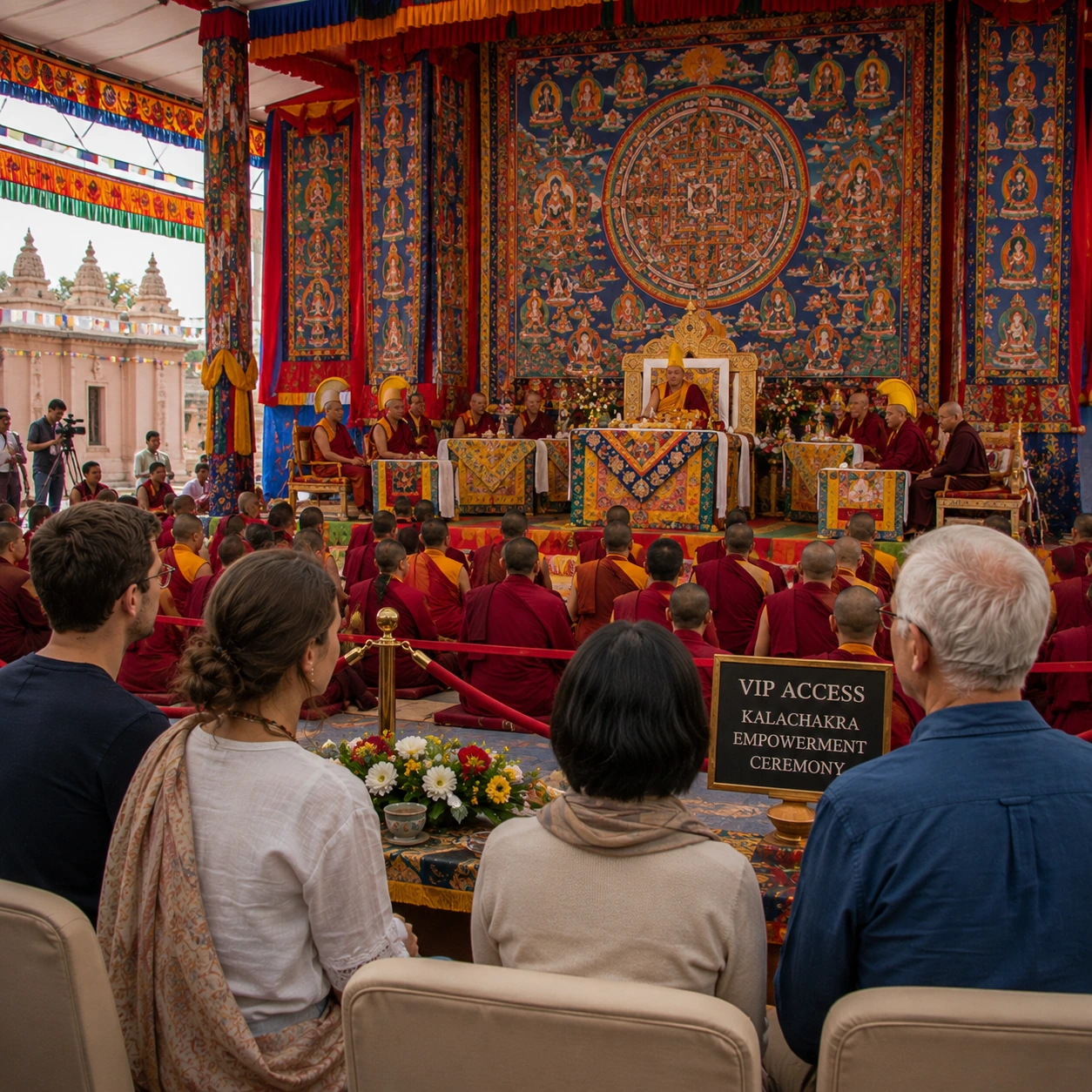
Kalachakra Empowerment Ceremony
Priority facilitated access when Dalai Lama or senior Rinpoche conducts Kalachakra empowerment.
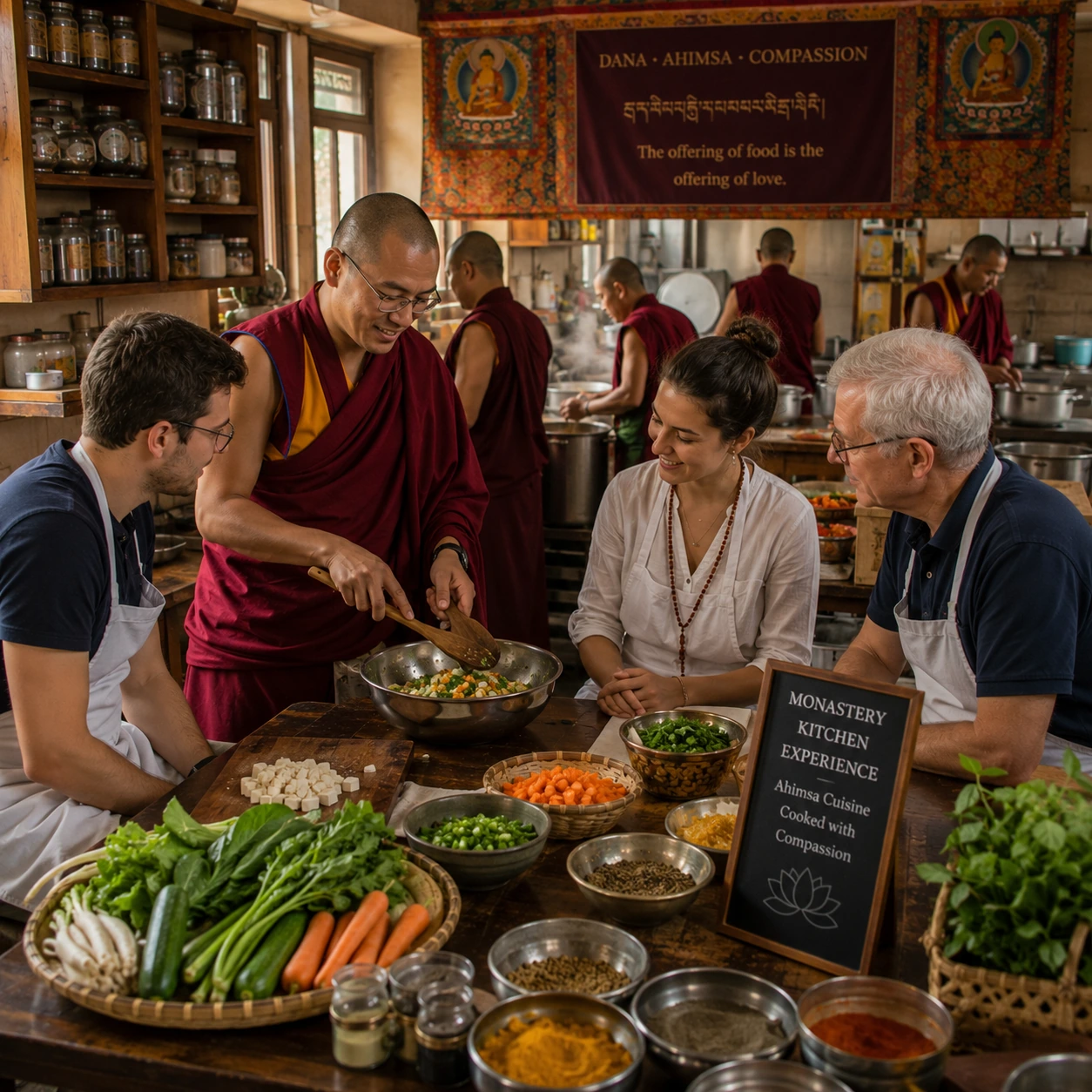
Heritage Food Journeys
Buddhist Monastery Kitchen Experience
Private access to monastery kitchen — observe/participate in dana (alms) meal preparation. Ahimsa cuisine.
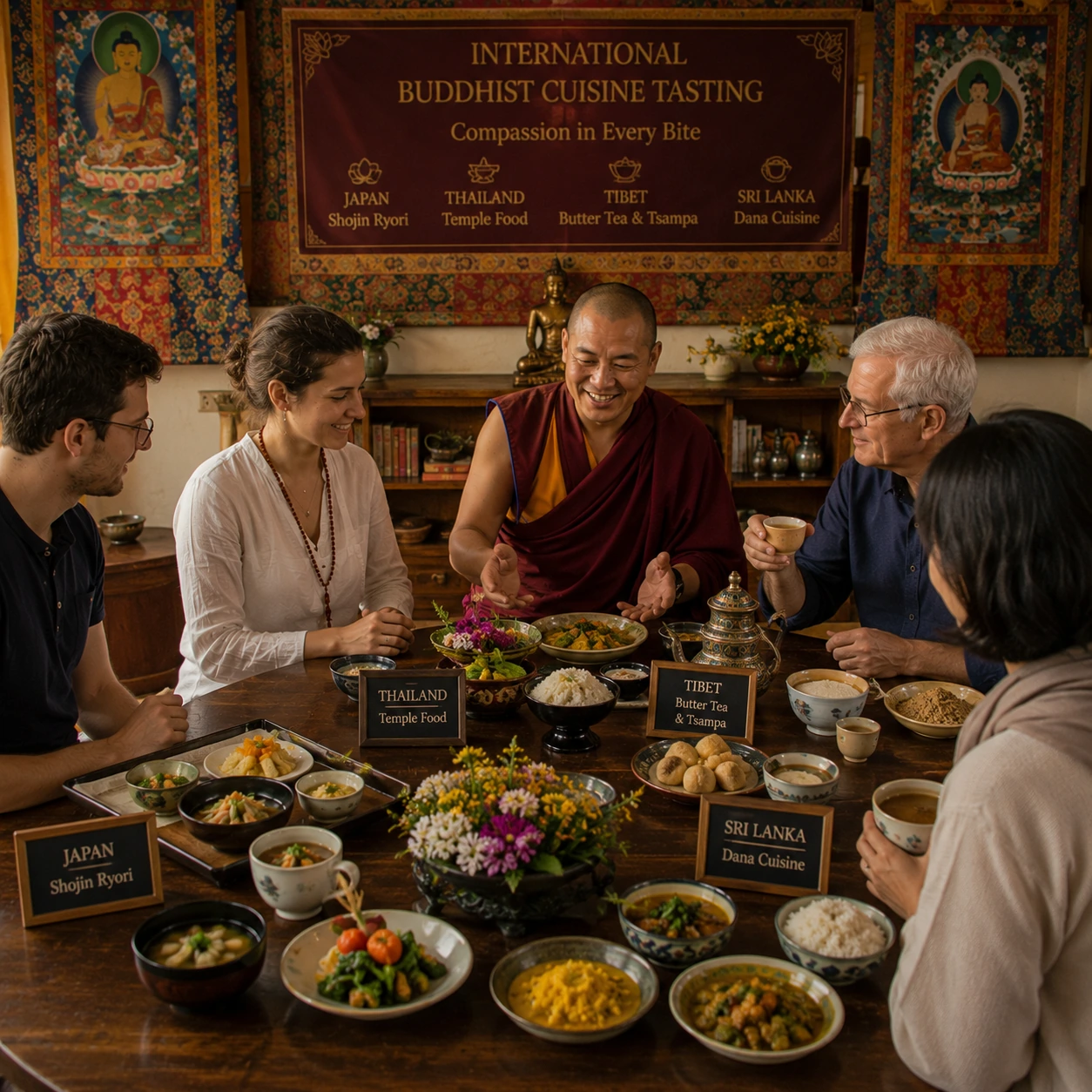
Heritage Food Journeys
International Buddhist Cuisine Tasting
Curated tasting spanning Japanese shojin ryori, Thai temple food, Tibetan butter tea & tsampa hosted by monks.
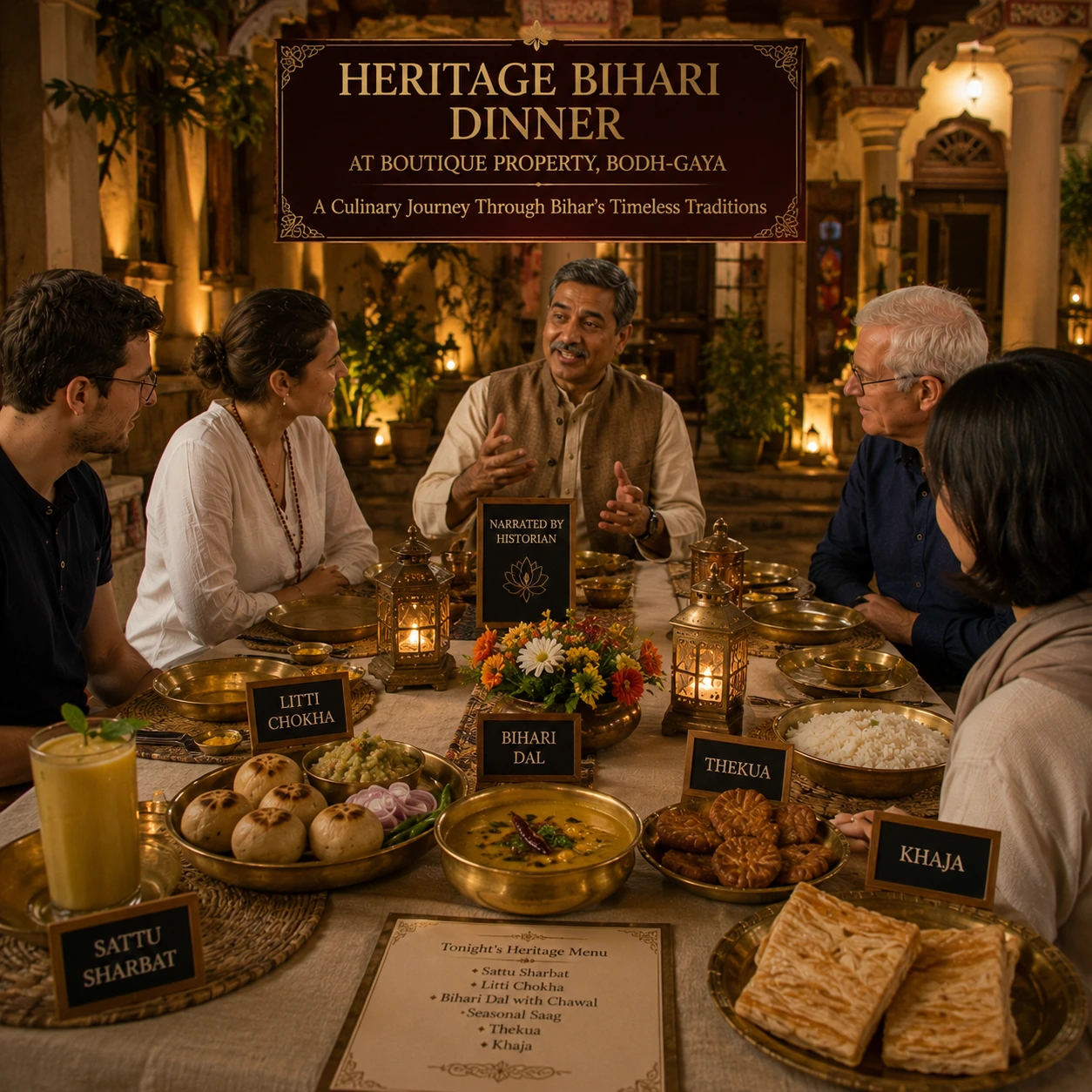
Heritage Food Journeys
Heritage Bihari Dinner at Boutique Property
Multi-course heritage dinner featuring litti chokha, sattu sharbat, bihari dal, thekua, khaja — narrated by historian.
Before You Go
Practical Information
Best Time to Visit
October – March (cool, dry; festival season Dec–Feb when major teachings often coincide)
Avoid
April – June (40°C+ heat); July – September (monsoon flooding of low areas)
Getting Here
Gaya International Airport (IXW) — 17 km / 30 min. Direct flights from Bangkok, Yangon, Colombo, Paro (Bhutan); or Patna (PAT) + 3-hr drive
Recommended Stay
2–3 nights minimum; 4 if attending teachings or pursuing deeper meditation
Where to Stay
The Royal Residency, Oaks Bodhgaya, Hotel Bodhgaya Regency, or our private heritage homestays.
Sacred Etiquette
Shoulders & knees covered; shoes removed at the temple gate; no leather inside the inner sanctum; silence near the Bodhi Tree
Photography
Permitted in outer complex; prohibited inside the inner sanctum and during ceremonies.
Mobility Notes
Main complex is wheelchair-accessible via ramps; some monasteries have steps.
Health & Safety
Bottled water only; carry sun protection; altitude is non-issue; the town is safe.
Festivals to Catch
Buddha Purnima (May); Kagyu Monlam (Dec/Jan); Nyingma Monlam (Jan/Feb); Losar (Feb/Mar)
Languages You'll Hear
Hindi, Magahi, Tibetan, Thai, Burmese, Pali, Japanese, English
Booking Note for Dalai Lama
His Holiness's winter teachings draw tens of thousands. Hotels book out 6–9 months ahead.
We arrived as historians and left as something quieter. The 5 AM sitting under the Bodhi Tree was the most important hour of my year. Our guide, a retired Pali professor, didn't lecture — he simply sat with us.
— Henrik & Ingrid Sørensen, Copenhagen · Spiritual Journey, March 2025
Begin Your Exploration
Ready to walk the path of Bodh Gaya?
Whether you seek a single dawn meditation or a full Buddhist circuit across the international monasteries, our specialists will craft a journey tailored to your spiritual goals, your pace, and your rituals.