— The City of Ancestors —
Gaya
The City Where the Living Honour the Departed — and Three Thousand Years of Ritual Have Not Paused
Best Time
Oct – Mar; Pitru Paksha (Sep)
Recommended Stay
1–2 nights (3+ for Pind Daan)
Nearest Airport
Gaya (IXW), 12 km
Heritage Status
Major Hindu Pilgrimage Site
The Story
The City Where the Living Honour the Departed
“In Hindu tradition, every soul deserves to be remembered, and one place above all is reserved for that remembrance. Gaya is that place. Vishnu's footprint, the Falgu's silent waters, and forty-eight sacred sites where the rituals of ancestry have been performed without pause for three thousand years.”
Most travelers arrive in Gaya en route to Bodh Gaya, expecting a small transit town. They are wrong.
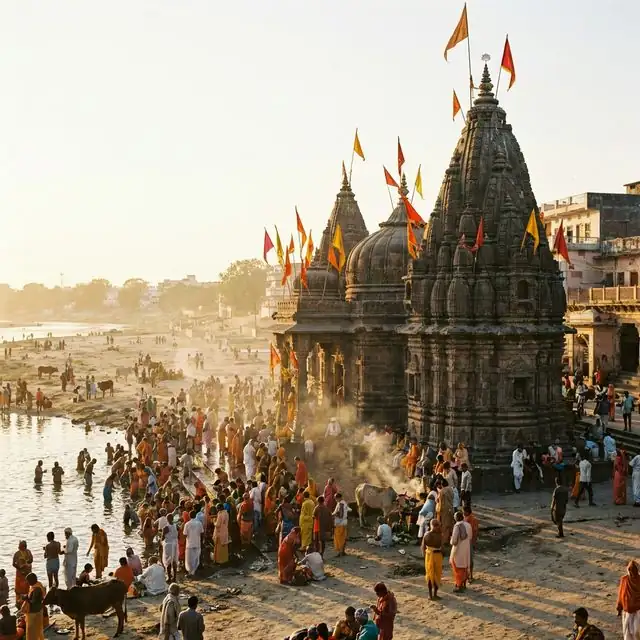
Gaya is its own destination — and for many Hindus, the most important pilgrimage site they will ever visit. The city is named for the demon Gayasura, whose body was sanctified by the gods after his death and whose head, by tradition, lies beneath the city's holiest shrine. That shrine is the Vishnupad Mandir — a forty-metre black-stone temple complex housing a 40-cm-long footprint of Lord Vishnu pressed into solid rock. The current temple was rebuilt in 1787 by the Maratha queen Ahilyabai Holkar of Indore — one of the great women of Indian history — but the site itself has been worshipped since at least the 6th century BCE, mentioned in the Mahabharata, the Vayu Purana, and Buddhist texts as a place of ancestral rites.
What makes Gaya unique among the world's pilgrimage cities is the ritual it specialises in: Pind Daan. This is the Hindu ceremony for offering rice-balls (pinda), water, and prayers to one's deceased ancestors — the act by which their souls are believed to be released from the cycle of rebirth and granted moksha (liberation). Gaya is the only city in India where Pind Daan can be performed for the entire ancestral lineage in a single ceremony, due to a boon granted, by tradition, by Lord Vishnu himself. There are forty-eight sacred ritual spots — vedis — across the city. The traditional performance covers seventeen of them, takes three to seven days, and is conducted by hereditary priest families called Gayawal Pandits, who have administered these rites for over 1,200 years in unbroken succession.
For HNI families from across the Indian diaspora — and increasingly from foreign devotees of Hindu and Buddhist traditions — Pind Daan in Gaya is the most meaningful ritual journey they will ever undertake. Tens of thousands of foreign pilgrims now make the journey annually during Pitru Paksha (the sixteen-day "ancestors' fortnight" in September–October), when the rituals are considered especially potent. Major Indian and international media have documented Russian, Italian, Brazilian, German, and Japanese devotees performing the ceremony in recent years — a quiet sign of how globalised this practice has become.
Beyond the rituals, Gaya rewards the curious traveler. The Falgu River is famously a "river that flows beneath" — its surface dry for most of the year, but with water just inches under the sand. Hindu legend says Sita cursed the river after a dispute over her ancestral offering; pilgrims dig small pits in the sand and find water within seconds, the river still keeping its quiet, cursed promise. The Brahmayoni Hill (1,000 steps to a small temple at the summit) was, according to Buddhist sources, where the Buddha delivered the Fire Sermon (the Adittapariyaya Sutta) — making Gaya, like Rajgir, a multi-faith sacred site where Hindu and Buddhist memory share a single landscape. The Mangla Gauri temple is one of the fifty-one Shakti Peethas — the most sacred sites in the worship of the Divine Feminine.
Roots & Rounds curates Gaya journeys for two distinct audiences:
Diaspora families seeking authentic Pind Daan — we work with senior Gayawal Pandits, English- and Hindi-fluent, who explain every mantra and step before performing it, in language that honours the gravity of the moment without obscuring it.
Discerning travelers seeking living-tradition cultural depth — a half-day temple walk with a Sanskrit scholar; dawn at the Falgu; the Brahmayoni climb at sunrise; an off-season midnight visit to the Vishnupad inner sanctum (rare, arranged with significant advance notice).
The city is small. Its accommodations are modest by HNI standards — most travelers stay in Bodh Gaya, fifteen minutes away — but Gaya's emotional weight is unmatched in the entire Bihar circuit. Travelers arrive expecting a stop. They leave feeling they have honoured something that had been waiting a long time to be honoured.
A Day in the Life
The Rhythm of Gaya
Pre-dawn pickup from Bodh Gaya hotel.
A transcendent encounter designed to unveil the layers of history and spiritual depth that define this sacred topography.
Arrive at the Falgu River. Light dawn ritual — dig the sand, perform a quiet offering.
A transcendent encounter designed to unveil the layers of history and spiritual depth that define this sacred topography.
Vishnupad Temple before crowds. Private commentary by your Gayawal Pandit.
A transcendent encounter designed to unveil the layers of history and spiritual depth that define this sacred topography.
Breakfast at a heritage Bihari thali restaurant.
A transcendent encounter designed to unveil the layers of history and spiritual depth that define this sacred topography.
Begin Pind Daan rituals or climb Brahmayoni Hill for the Fire Sermon site.
A transcendent encounter designed to unveil the layers of history and spiritual depth that define this sacred topography.
Visit the Mangla Gauri Shakti Peetha and the Surya Mandir at Deo.
A transcendent encounter designed to unveil the layers of history and spiritual depth that define this sacred topography.
Return to Bodh Gaya for dinner.
A transcendent encounter designed to unveil the layers of history and spiritual depth that define this sacred topography.
Curated Experiences
What You'll Experience
Spiritual & Historical Walks
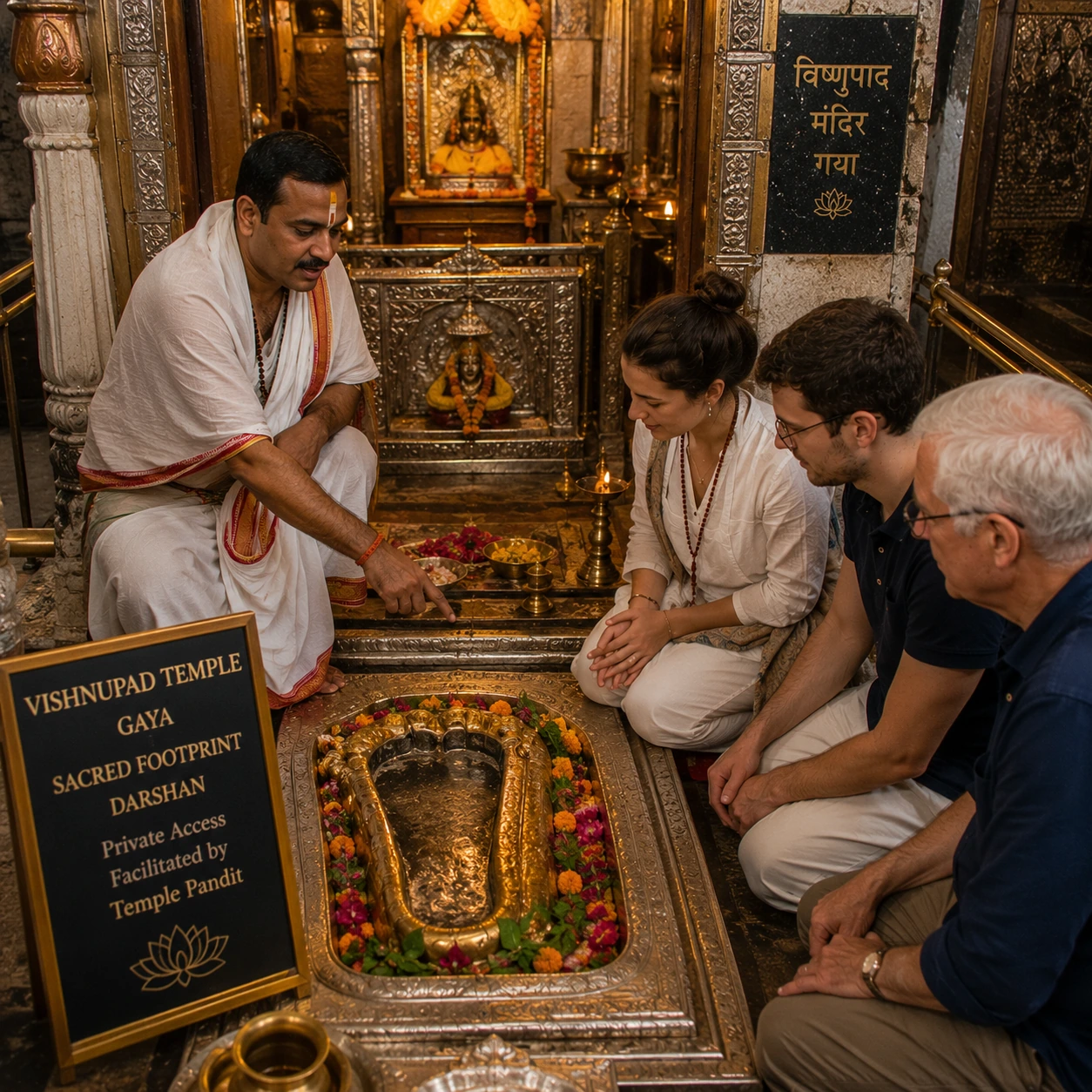
Vishnupad Temple Sacred Footprint Darshan
Private access to inner sanctum housing the 40-cm Vishnu footprint. Facilitated by temple pandit.
Spiritual & Historical Walks
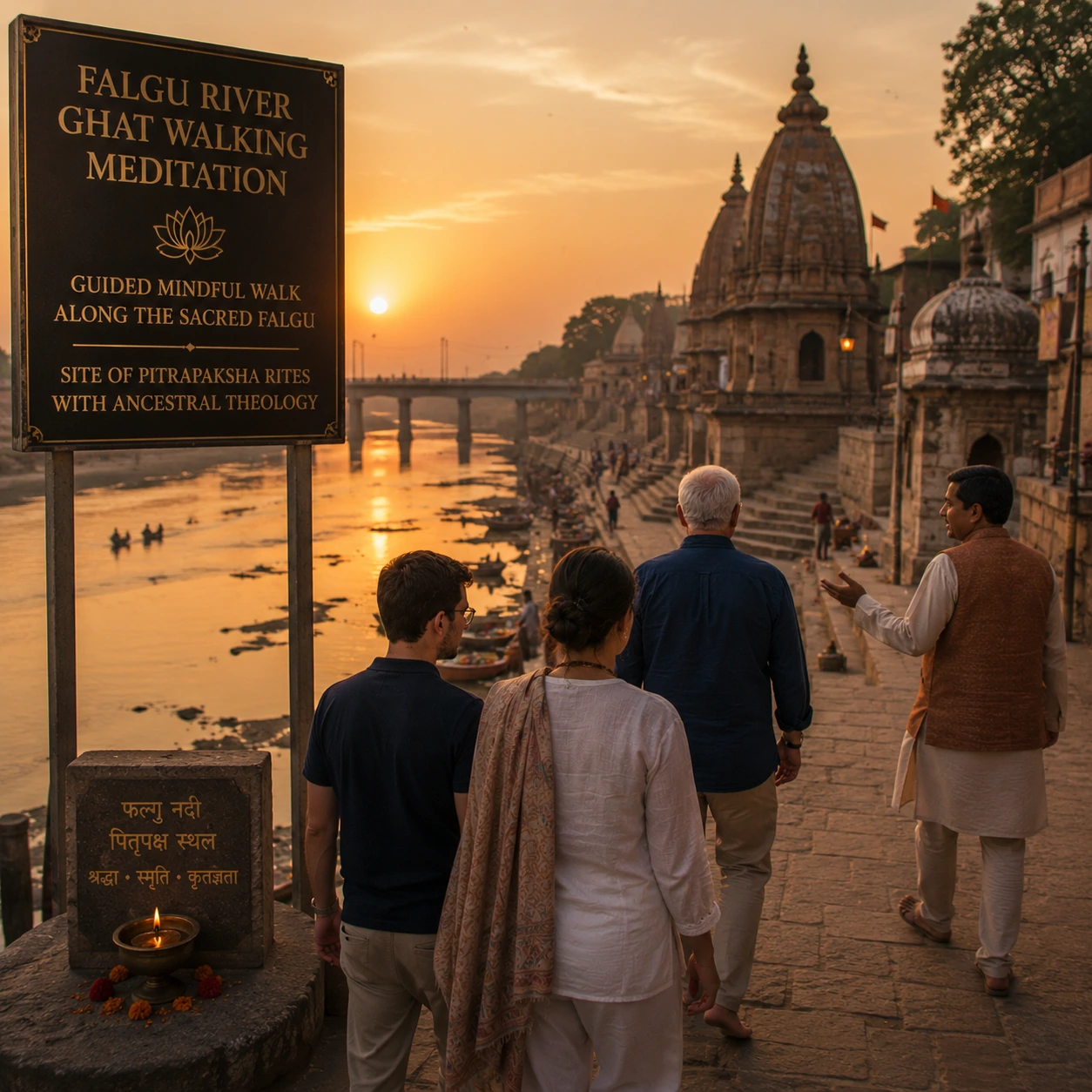
Falgu River Ghat Walking Meditation
Guided mindful walking along the sacred Falgu River — site of Pitrapaksha rites — with ancestral theology.
Spiritual & Historical Walks
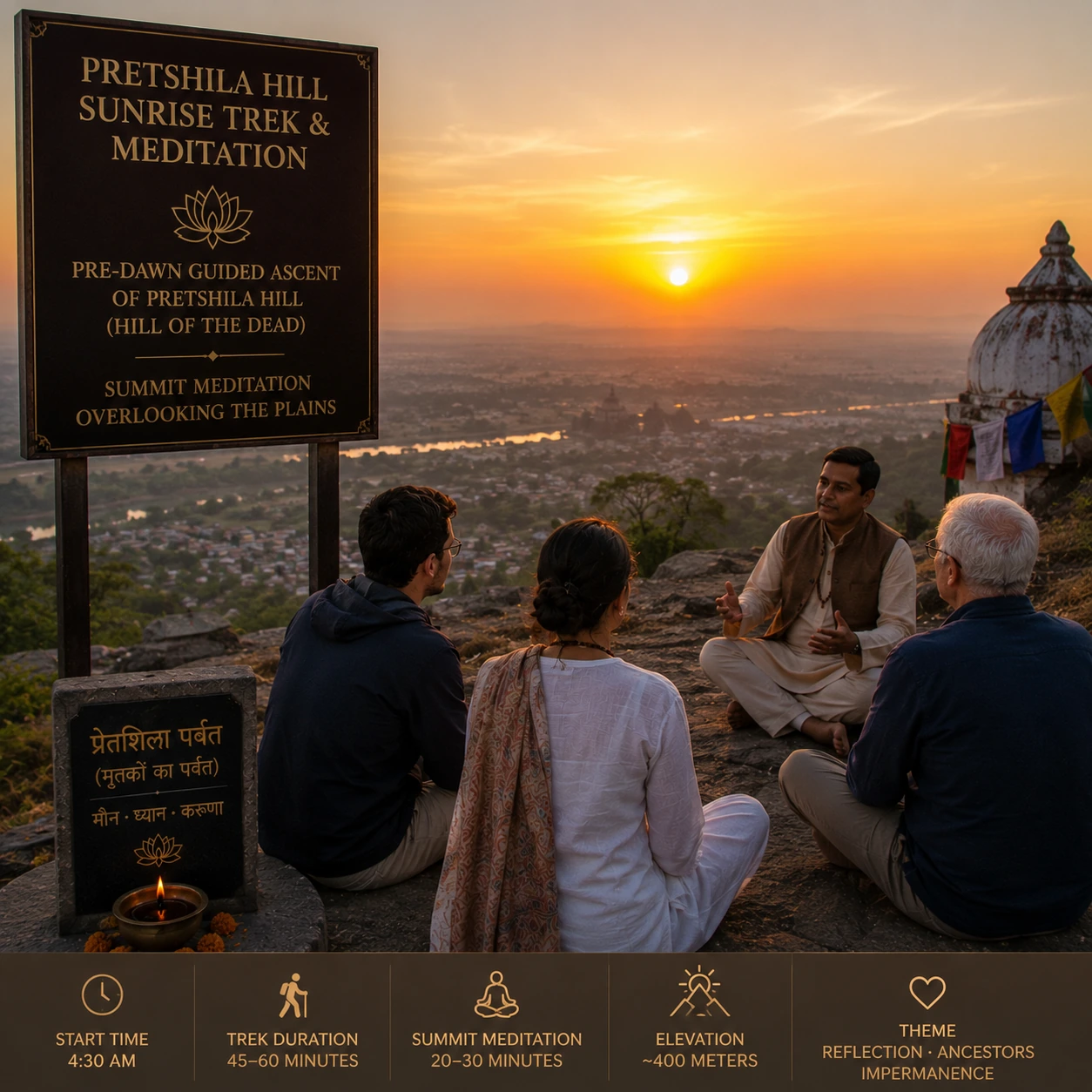
Pretshila Hill Sunrise Trek & Meditation
Pre-dawn guided ascent of Pretshila Hill (Hill of the Dead) with summit meditation overlooking the plains.
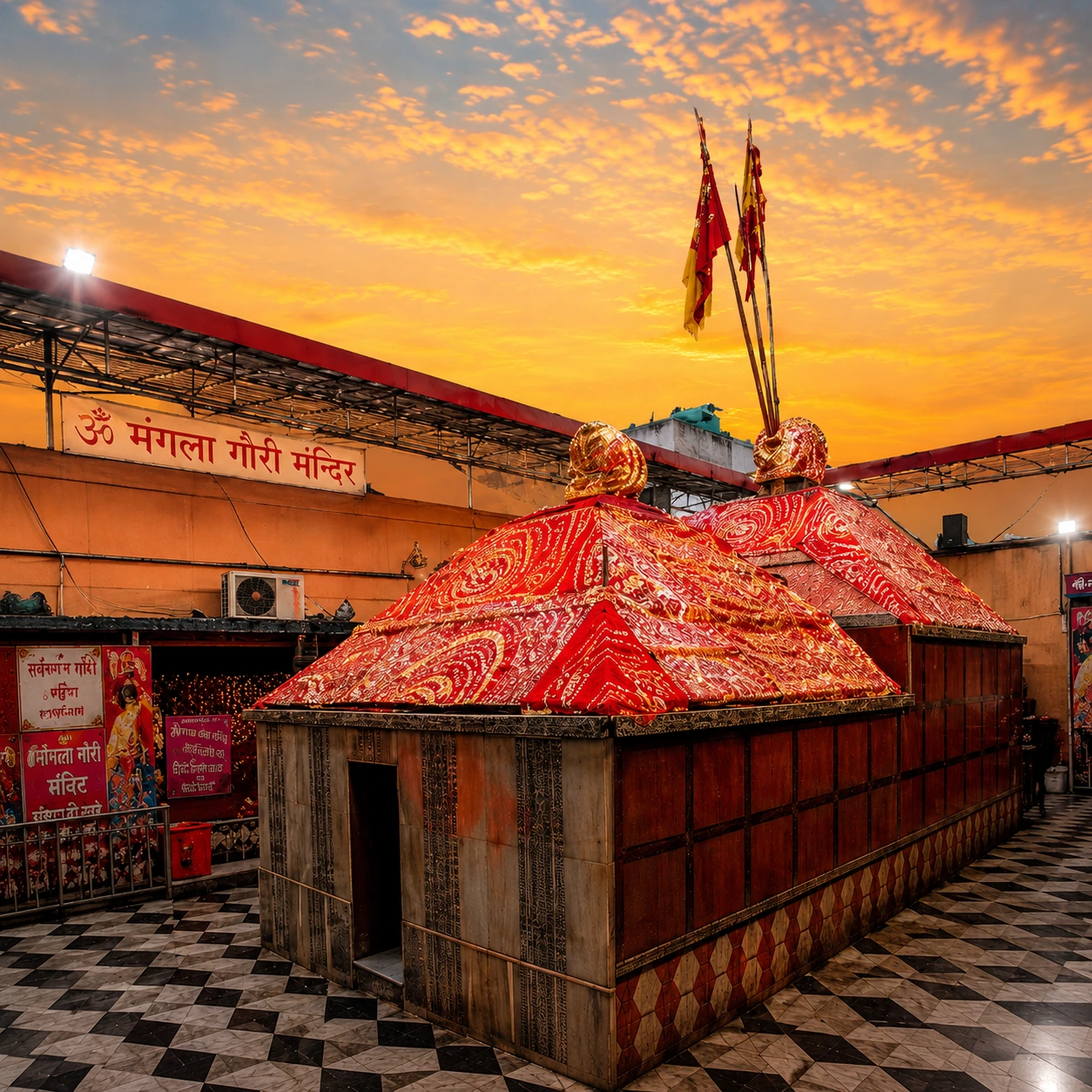
Spiritual & Historical Walks
Mangla Gauri Temple Dawn Puja
Private participation/observation of dawn puja at the Mangla Gauri Shakti Pitha — one of 18 Mahashakti Pithas.
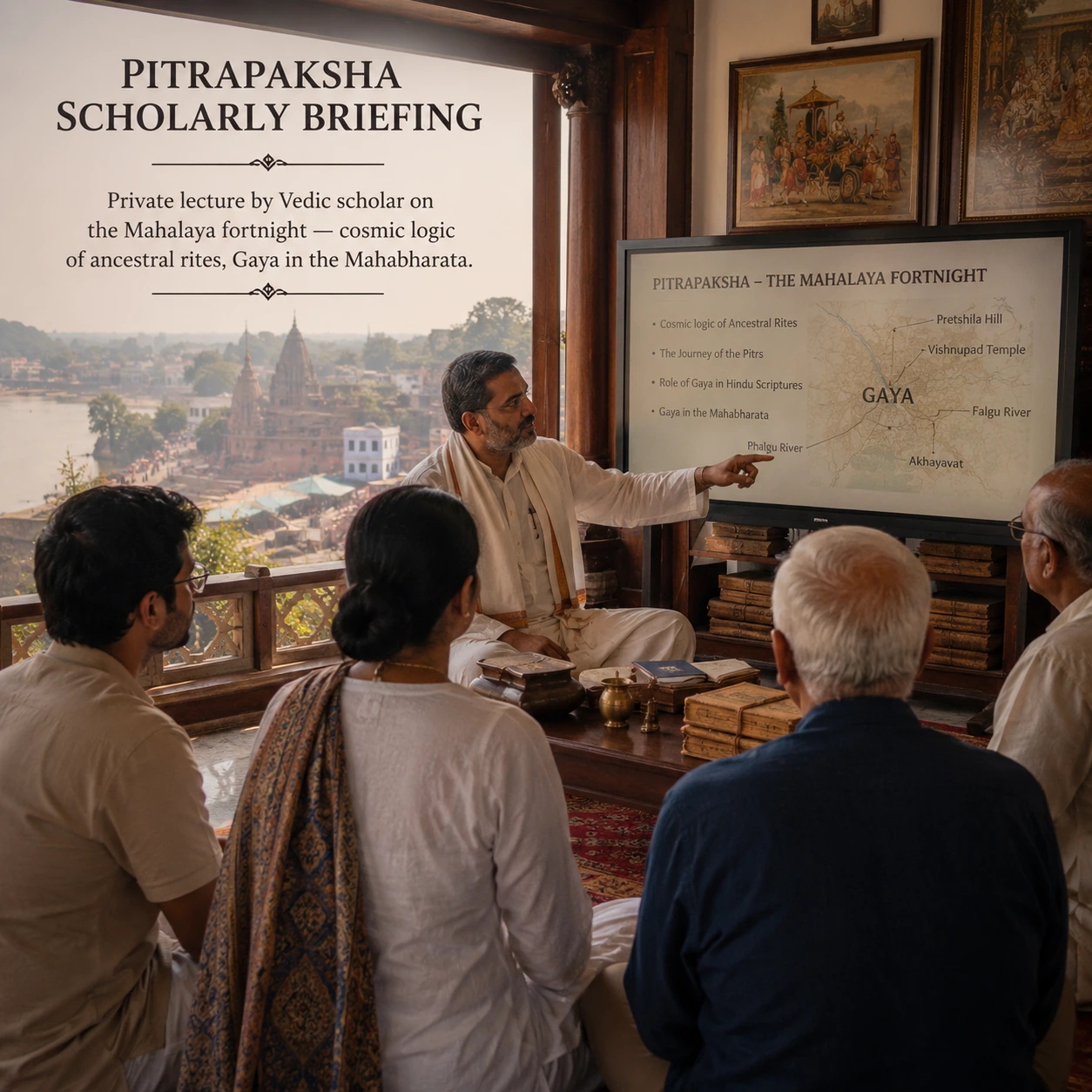
Scholarly Retreats
Pitrapaksha Scholarly Briefing
Private lecture by Vedic scholar on the Mahalaya fortnight — cosmic logic of ancestral rites, Gaya in the Mahabharata.
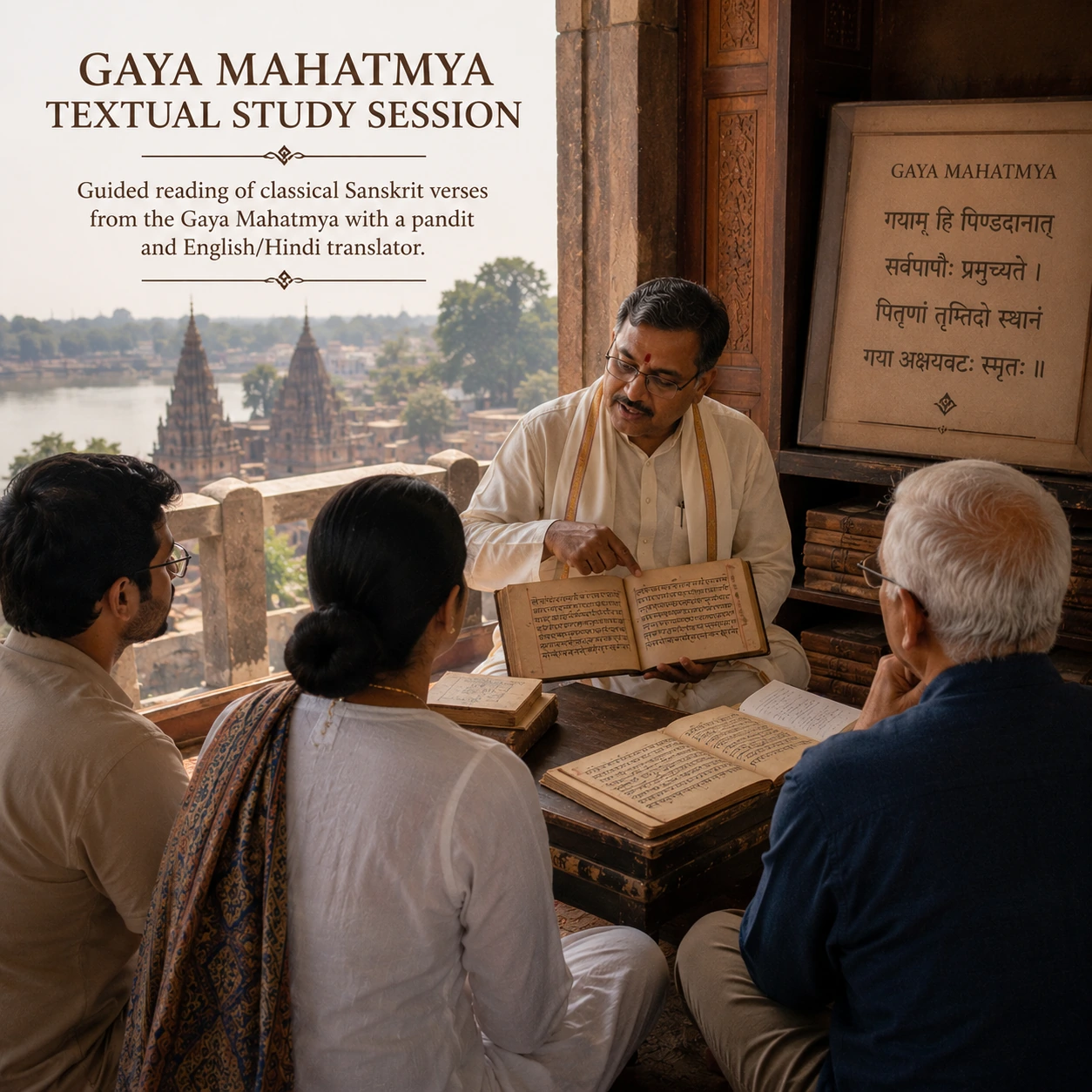
Scholarly Retreats
Gaya Mahatmya Textual Study Session
Guided reading of classical Sanskrit verses from the Gaya Mahatmya with a pandit and English/Hindi translator.
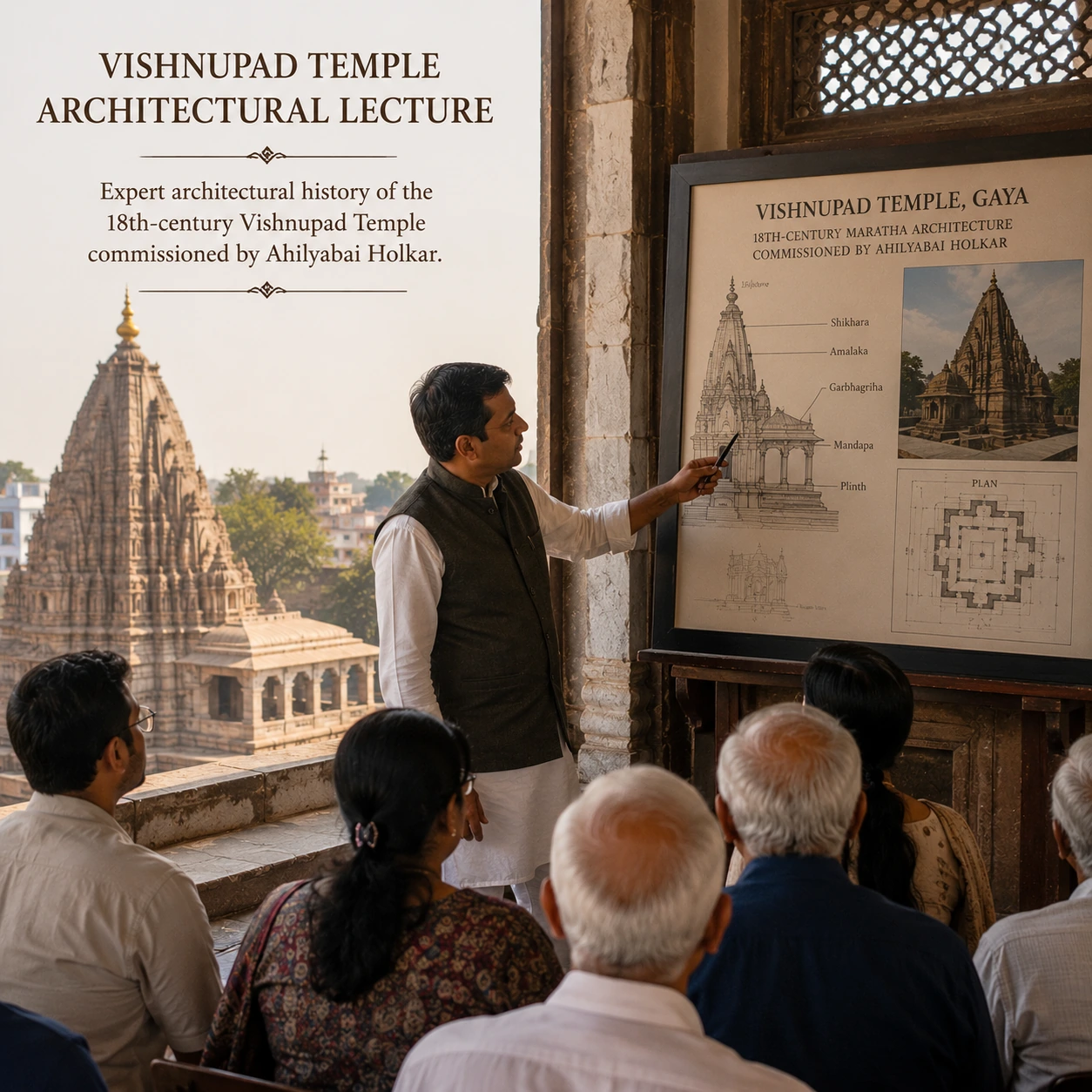
Scholarly Retreats
Vishnupad Temple Architectural Lecture
Expert architectural history of the 18th-century Vishnupad Temple commissioned by Ahilyabai Holkar.
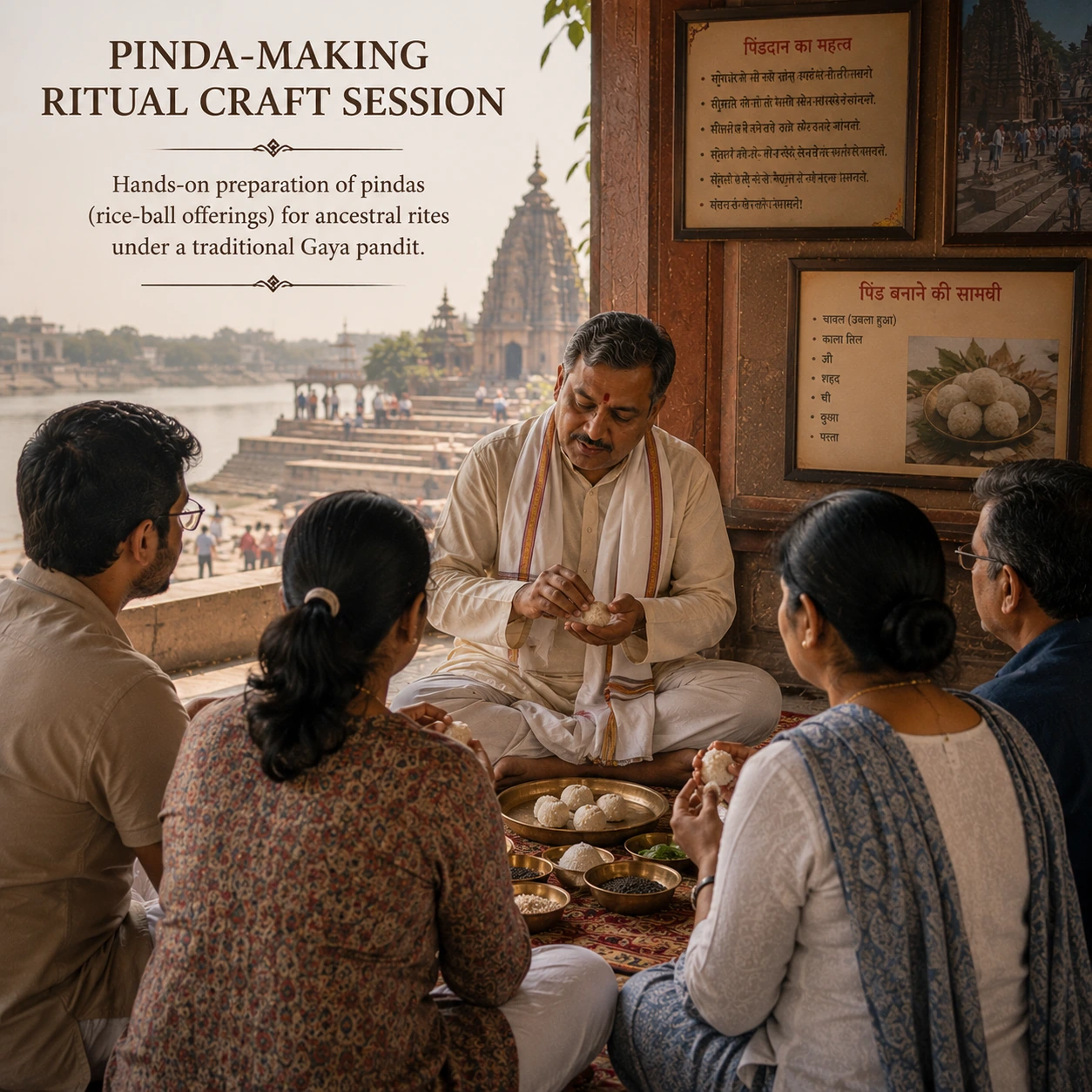
Art & Craft Workshops
Pinda-Making Ritual Craft Session
Hands-on preparation of pindas (rice-ball offerings) for ancestral rites under a traditional Gaya pandit.
Art & Craft Workshops
Traditional Gaya Textile Weaving
Private session at a local weaver's workshop learning cotton/silk weaving techniques patronised by temple economy.
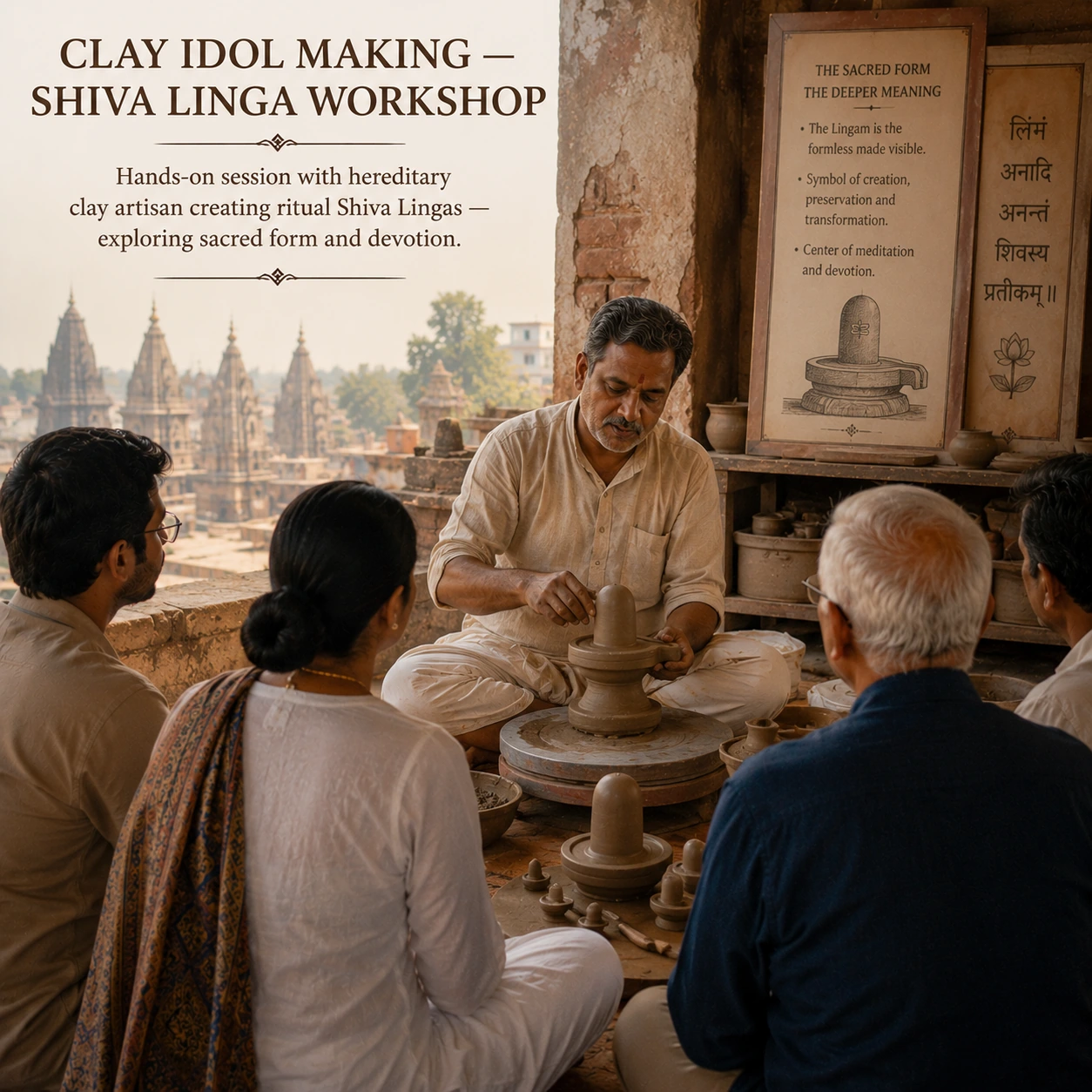
Art & Craft Workshops
Clay Idol Making — Shiva Linga Workshop
Hands-on session with hereditary clay artisan creating ritual Shiva Lingas — exploring sacred form and devotion.
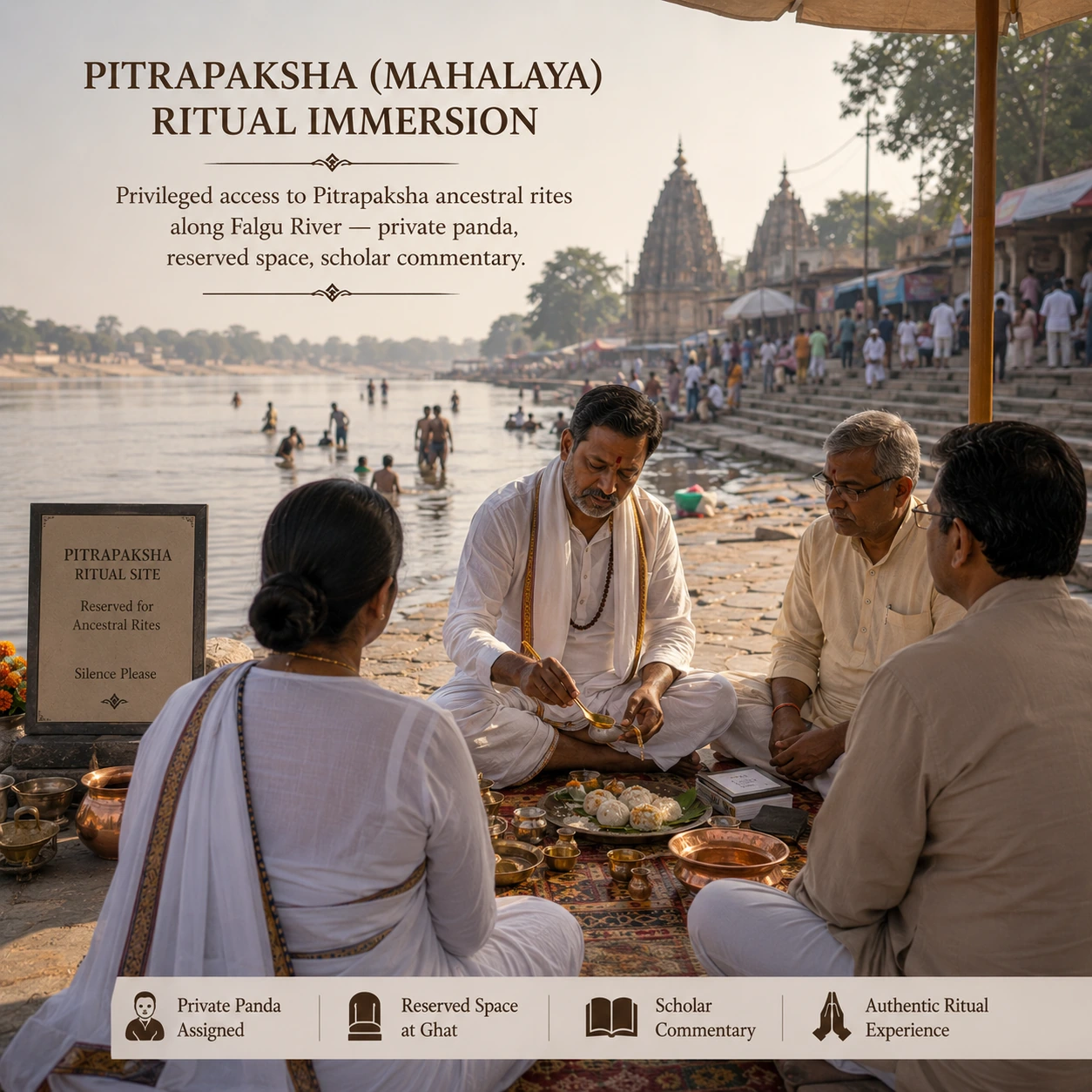
Festival Immersions
Pitrapaksha (Mahalaya) Ritual Immersion
Privileged access to Pitrapaksha ancestral rites along Falgu River — private panda, reserved space, scholar commentary.
Festival Immersions
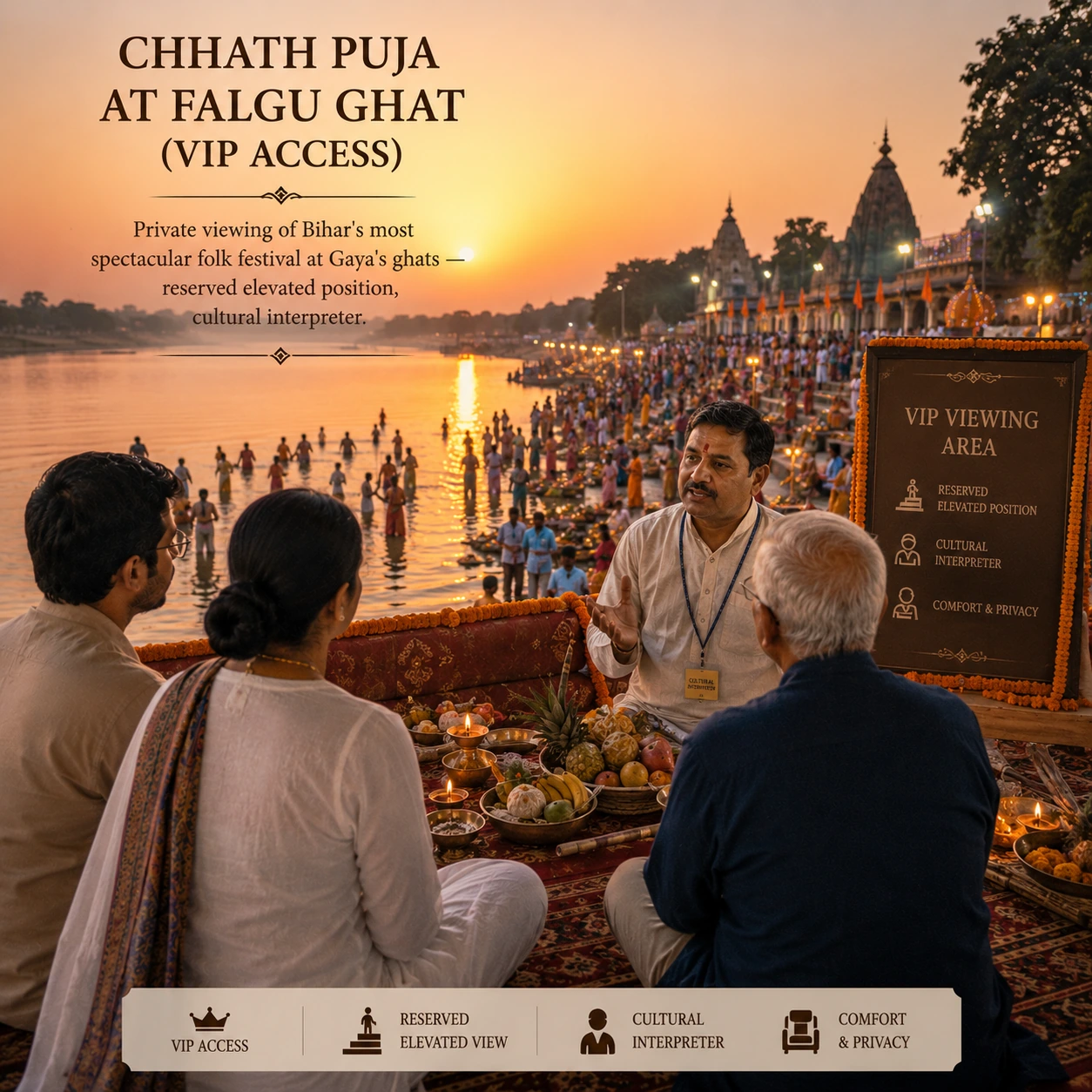
Chhath Puja at Falgu Ghat (VIP Access)
Private viewing of Bihar's most spectacular folk festival at Gaya's ghats — reserved elevated position, cultural interpreter.
Festival Immersions
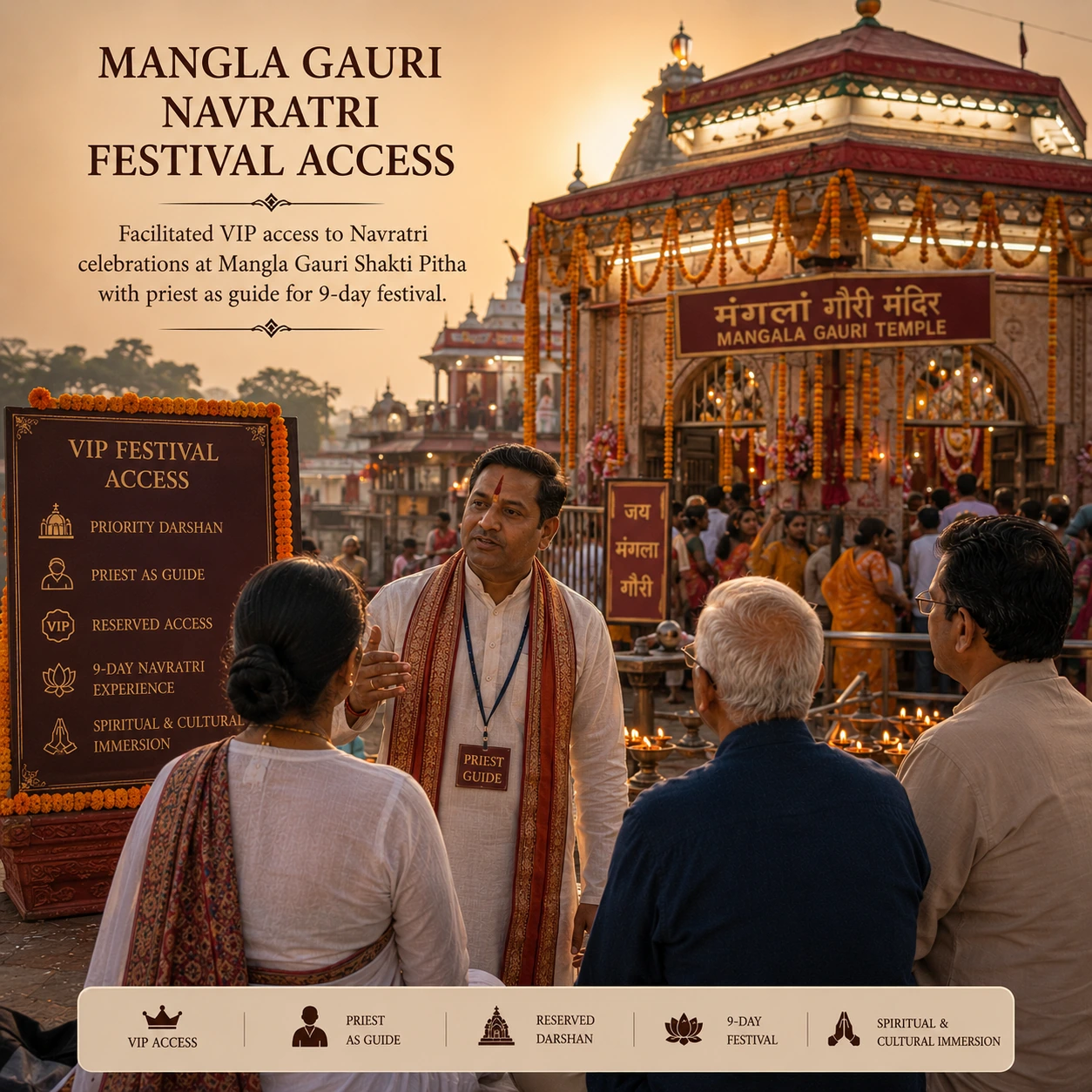
Mangla Gauri Navratri Festival Access
Facilitated VIP access to Navratri celebrations at Mangla Gauri Shakti Pitha with priest as guide for 9-day festival.
Heritage Food Journeys
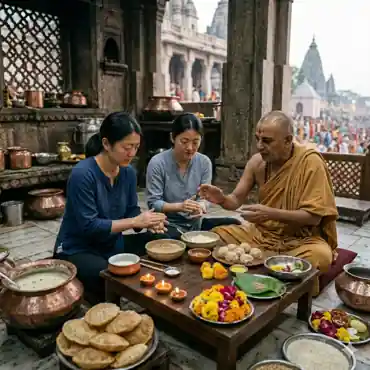
Pitrapaksha Ritual Food Preparation
Hands-on preparation of traditional Gaya Shraddha prasad — kheer, puri, til-based sweets — under hereditary priest-cook.
Heritage Food Journeys
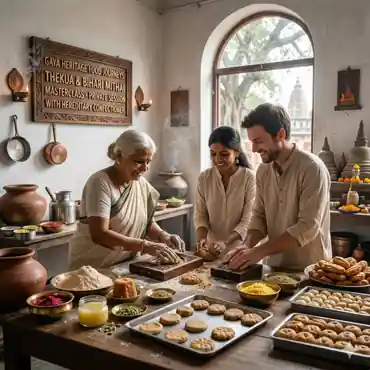
Thekua & Bihari Mithai Masterclass
Private masterclass with heritage confectioner making thekua (quintessential Bihari Chhath sweet) and other traditional mithai.

Heritage Food Journeys
Heritage Family Kitchen Lunch
Intimate multi-course lunch hosted by a Gaya Brahmin family at their ancestral home — traditional home cooking.
Before You Go
Practical Information
Best Time to Visit
October – March for general visiting; Pitru Paksha (mid-September to early October) for Pind Daan rituals
Avoid
April – June (45°C heat); July – August (monsoon flooding)
Getting Here
Gaya International Airport (IXW) — 12 km / 20 min. Direct flights from Bangkok, Yangon, Colombo
Recommended Stay
Stay in Bodh Gaya (15 min away) and visit Gaya as day-trips.
Where to Stay
The Royal Residency (Bodh Gaya), Oaks Bodhgaya, Hotel Vishnu Vilas, or heritage homestays.
Sacred Etiquette
Strict dress code: men in dhoti for Pind Daan; women in saree; no leather inside inner sanctum.
Photography
Strictly prohibited inside the Vishnupad Temple inner sanctum and during Pind Daan.
Mobility Notes
Vishnupad has steps; Brahmayoni Hill is a 1,000-step climb (palanquin available).
Booking Note for Pind Daan
Must be booked at least 30 days in advance. 60–90 days for Pitru Paksha.
Cost Note for Pind Daan
Includes pandit honorarium, ritual materials, temple offerings, and assistants.
Languages
Hindi, Magahi, Sanskrit, English (with our scholar-translators).
My father passed in 2019. I had carried something I couldn't name for five years. After three days in Gaya, with our Gayawal Pandit explaining every step in English and Sanskrit, I understood what I had been carrying. And I set it down.
— Anita Krishnan, San Francisco · Family Ancestral Journey, October 2024
Begin Your Exploration
Honour those who came before.
Whether you seek a full Pind Daan ceremony for your lineage or a single quiet morning at the Falgu, our pandits and scholar-guides will create a journey of meaning.